
Rome Resources is a high-risk exploration thesis, not a recommendation. I am assessing it as a personal investor by asking a narrower question than “could this become a big tin story?”: can the Kalayi discovery move from an early geological promise to an asset with a defined, financeable development path?
The distinction matters. A small explorer can produce exciting drill results and still fail to create durable value if resource confidence, tenure, metallurgy, funding or on-the-ground execution do not follow. For RMR, the headline potential is interesting. The investable work is in the proof still required.
The project and what is verified today
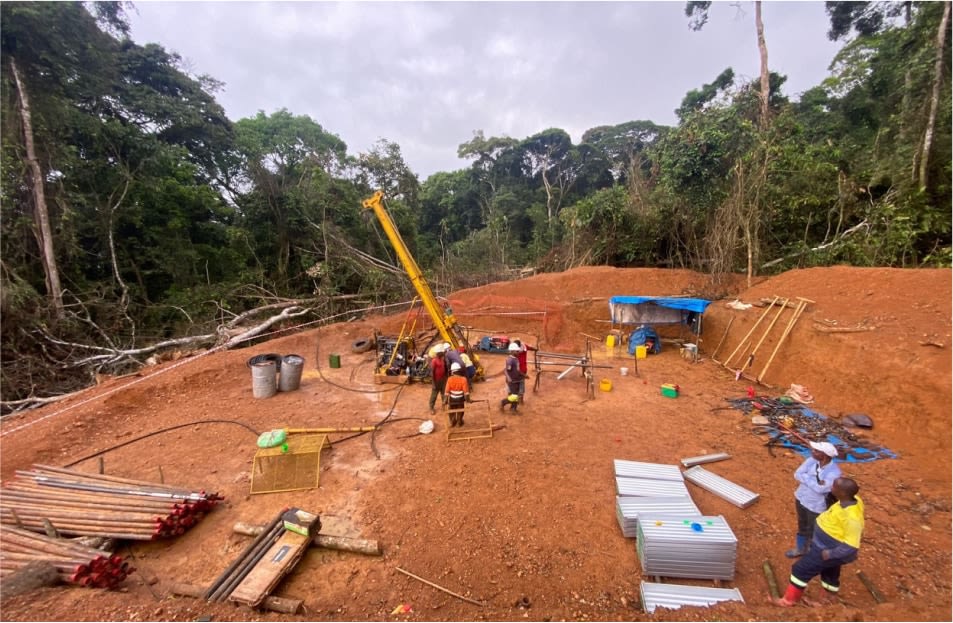
Rome Resources describes Kalayi as part of its Bisie North tin project in North Kivu, Democratic Republic of Congo. The company’s official project page places it near the Bisie Ridge, but proximity to established mines or other prospects is not evidence that Kalayi itself is economic. Each deposit has to earn that conclusion through its own drilling, engineering, recovery work, permitting and financing.
The key recent factual step is the company’s 2 September 2026 updated mineral resource announcement, which reported a 45% increase in contained tin. Management has also highlighted improved grade. That is the right direction, but the Kalayi estimate remains an Inferred Mineral Resource, not a reserve. It is therefore an early confidence category, not a mine plan and not proof of future extraction or profitability.
Why resource definition and grade matter
Contained-metal growth can attract attention, yet the more important question is what sits underneath the headline. Better definition can clarify continuity, geometry, thickness and the distribution of higher-grade zones. Higher grade can help a future project, because it may improve the amount of payable metal recovered per tonne processed. Neither outcome should be assumed from a resource headline alone.
For a remote tin project, the eventual economics will depend on far more than grade: mineable shapes, dilution, recovery, processing design, concentrate quality, transport, sales terms, capital intensity and operating costs all matter. I would rather see RMR turn uncertainty into successive technical evidence than rely on comparisons with nearby operations.
The milestones that would strengthen the case
- Resource confidence: drilling that improves the density and continuity of the Kalayi data set, with a transparent explanation of how the resource model changes.
- Grade and metallurgy: repeatable results that show whether mineralisation can be recovered into a saleable concentrate, rather than isolated high-grade observations.
- Licence conversion: evidence that the current programme supports conversion of PEPM 13274 into a full mining licence. The company’s 15 June 2026 announcement makes clear that conversion remains a programme and process, not a completed outcome.
- Ownership consolidation: progress on the proposed increase in Kalayi ownership only once its conditions are actually satisfied. An expected ownership rise is not the same as an owned interest today.
- Capital discipline: a funding plan that matches the scale and duration of exploration, technical studies, permitting and site execution without making the share count an afterthought.
What would weaken it
- Drilling that expands tonnage without improving confidence, continuity or practical mineability.
- Metallurgical or concentrate results that make recovery, marketing or transport harder than the geological story suggests.
- Delays or conditions around licence conversion, ownership consolidation or local operating permissions.
- Financing that repeatedly extends the runway while creating substantial dilution or leaving a material warrant overhang.
- A deterioration in security, logistics or jurisdictional conditions in North Kivu.
Where I could be wrong
The optimistic case could be wrong because an Inferred resource may not convert into a mineable, higher-confidence inventory on attractive terms. It could also be wrong because licence conversion and any ownership increase are conditional, rather than completed facts. North Kivu brings material security, logistics and jurisdiction exposure that cannot be diversified away at project level.
Funding is another central risk. Exploration cash is limited relative to the work that would be needed to de-risk, study and develop a remote project. The company’s half-year results and September 2026 financing announcement should be read with that in mind. Future capital will be needed, and dilution plus a warrant overhang can be very material for shareholders.
Finally, the usual development risks are not background noise here. Remote execution, metallurgy, concentrate marketing and the tin price can each change the value of the same geological asset. A stronger resource estimate would be helpful, but it would not neutralise those risks.
My monitoring checklist
- Does each drilling update add confidence and continuity, not just a larger headline?
- Are grade, width, recovery and concentrate specifications moving toward a coherent processing case?
- Has the mining-licence conversion moved from programme to verified outcome?
- Have the conditions for the proposed ownership increase been met, and on what terms?
- How much cash is available, what warrants remain outstanding, and what work is funded before the next raise?
- Are security, logistics and operating conditions in North Kivu improving, stable or worsening?
- Does the tin market support a plausible development case without requiring an exceptional price environment?
Bottom line
RMR is interesting to me because Kalayi’s resource growth and improved grade create a more substantial technical question than the earlier discovery-stage story. The thesis is not that a resource update makes the project economic. It is that disciplined resource definition, credible permitting progress, ownership clarity and adequately funded execution could make the answer clearer over time.
Until then, this belongs in the speculative end of a portfolio process. Readers can see how I frame individual holdings and risk at the Portfolio page.
Disclaimer
This article records a personal research view, not investment advice or a recommendation to buy, sell or hold any security. Small-cap exploration companies can be highly volatile and investors can lose all of their capital. Verify primary disclosures, consider your own circumstances and seek regulated advice where appropriate.