Concentrated Investing: Conviction, Position Size and Risk

Concentrated investing is not the same as careless investing. It is a decision to let a small number of ideas have a meaningful effect on your result, while accepting that being wrong will hurt more.

I run a concentrated main portfolio. That is a personal choice, not a template for anyone else. I am trying to own fewer businesses that I understand deeply rather than a larger list that gives the appearance of safety without real conviction.

What concentrated investing means to me

A concentrated portfolio is not defined by a magic number of holdings. It is defined by whether the biggest positions can materially change the outcome. In my case, Rocket Lab became a position large enough that it could move the main ISA meaningfully in either direction.

I wrote about why I made Rocket Lab roughly 50% of my portfolio because a decision that large should be documented before its outcome is obvious.

The case for fewer, higher-conviction positions

The potential benefit is focus. With fewer businesses to follow, I can spend more time understanding the thesis, the risks and the evidence that would change my mind. That does not guarantee good outcomes. It just makes the decision process more visible.

There is also a difference between diversification and simply owning more tickers. If I cannot explain why I own something, what would invalidate the thesis and what role it plays in the portfolio, the extra holding may not be reducing the risk that matters.

The risks are real

Concentration magnifies mistakes. A missed execution target, financing need, valuation reset or wider market drawdown can hurt far more when a position is large. It can also make ordinary volatility emotionally difficult to sit through.

That is why I do not describe concentration as safe. The point is not to pretend the risk away. The point is to decide whether the potential upside is worth the risk, then keep testing that decision honestly.

My checks before adding to a position

  • Can I explain the business and the core thesis in plain English?
  • What would make me reduce or sell the position?
  • Am I adding because the thesis improved, or because I want a falling price to stop hurting?
  • Would I still be comfortable owning it if the share price fell further?
  • Is the position size consistent with the risk I am actually taking?

Document the decision before the result

The most useful discipline is recording why I made a decision before I know whether it works. That creates a more honest record than rewriting a story after a gain, or pretending a loss was unforeseeable.

My monthly portfolio reviews are part of that process. They show what changed, where conviction increased and where I could be wrong. The live Portfolio page shows the current IBKR ISA snapshot separately from the Trading 212 challenge.

This is a personal investing framework, not financial advice. A concentrated portfolio can create large losses as well as large gains.

Interactive Brokers vs Trading 212: Which Is Better for UK Investors?

Interactive Brokers vs Trading 212 is not really a question of which broker is universally better. It is a question of what kind of UK investor you are today, and what you may need from your account later.

I use both platforms in different contexts. My main ISA portfolio is held with Interactive Brokers, while Trading 212 is the separate home of my £15k High Growth Challenge. That does not make one platform right for everyone. It does give me a practical basis for comparing the trade-offs.

Interactive Brokers vs Trading 212 at a glance

Question Interactive Brokers Trading 212
Best suited to Investors who value flexibility, wider market access and a platform they may not outgrow. Investors who want a clean, straightforward way to start investing.
Learning curve Higher. There are more settings, reports and choices to understand. Lower. The app is designed to make the basic investing workflow feel simple.
Experience More functional than elegant, especially at first. More immediately approachable on mobile.
My use case Main long-term ISA portfolio. Separate, smaller high-growth challenge.

Choose Trading 212 if simplicity is your priority

Trading 212 can make sense if you want to open an account, understand the basic mechanics quickly and begin building a simple portfolio without a dense platform getting in the way. For many new investors, usability matters. A platform that feels understandable is more likely to be used consistently.

It may be a better fit if you mainly want a straightforward Stocks and Shares ISA experience, invest regularly and do not need a wide range of advanced functions. Before opening an account, check the current eligibility, available instruments, charges and ISA rules directly with Trading 212.

Choose Interactive Brokers if you value flexibility

Interactive Brokers can suit an investor who expects their needs to become more complex over time. The platform is less immediately friendly, but it offers more depth for investors who care about international access, account reporting and a broader long-term toolkit.

That is why it became the home of my main ISA portfolio. I wanted a platform I could grow into, not just one that looked good on the first day. The trade-off is that the experience can feel more demanding. More options are only useful if you understand how you will use them.

Check the current account options and charges on the official Interactive Brokers site before deciding.

Do not choose a broker only on fees

Fees matter, but they are not the whole decision. The more useful questions are:

  • Will I understand the platform well enough to use it consistently?
  • Does it support the account type and investments I genuinely need?
  • Will I still be comfortable using it when the portfolio is larger?
  • Can I get the records and reporting I want at tax time?

A low-cost account that encourages poor decisions is not automatically better. Equally, advanced features are not a reason to choose complexity for its own sake.

My view as a UK investor

For an investor starting from scratch, Trading 212 can be the easier first step. For a more serious long-term setup, I prefer the flexibility of Interactive Brokers for my main ISA. That is a personal fit, not a universal recommendation.

The best broker is the one that supports a repeatable process. It should make it easier to invest according to your own plan, not tempt you to react to every green or red day.

Related reading

This article is general information, not financial advice. Broker availability, fees and product terms can change. Confirm the current details directly with each provider.

How Much Should I Invest Each Month to Reach £1m?

How much you need to invest each month to reach £1m depends on four things: what you have already invested, how long you have, how much you can contribute, and the return you assume.

There is no honest single answer. Anyone giving you one without asking those questions is skipping the part that matters.

That is why I built the £1m Path Calculator. It lets you put your own starting amount, monthly contribution, time horizon and illustrative annual return into the calculation without storing any of your information.

Start with the target, then work backwards

A £1m portfolio can sound so large that it becomes an abstraction. Working backwards makes it more useful. Rather than asking whether £1m is realistic in the abstract, ask what combination of time, contribution rate and starting capital would make it possible under a range of assumptions.

The three levers are simple:

  • Starting capital: money already invested has more time to compound.
  • Monthly contribution: a sustainable contribution matters more than a short burst of enthusiasm.
  • Time: starting earlier gives compounding more room to work.

Why the monthly contribution matters

Your contribution rate is the part of the calculation you can influence most directly. Markets will not deliver the same return every year, but you can decide how much of your income is consistently directed toward future freedom.

That does not mean the answer is to make life miserable in pursuit of a number. A contribution rate only works if it is sustainable through normal life, unexpected costs and changes in work or family circumstances.

Use more than one return assumption

A calculator can be useful without pretending to forecast the future. I prefer looking at several illustrative return assumptions and asking what happens if reality is less generous than the optimistic case.

The calculator uses monthly compounding with end-of-month contributions. It excludes tax, fees, inflation and market volatility, so its result is an illustration rather than a promise. That limitation is a feature. It keeps the focus on the inputs you can control.

The cost of delaying

The most useful number is often not the final total. It is the difference between starting now and starting five years later with exactly the same monthly contribution. Time is not exciting, but it is difficult to replace once it has gone.

If £1m is not the target that matters to you, change it. The aim is not to copy somebody else’s number. It is to build enough assets to create more options over your own time.

Use the calculator as a planning tool

Try three versions of your plan:

  1. A cautious case with a lower illustrative return.
  2. A base case using a contribution rate you can genuinely maintain.
  3. An accelerated case that shows what would change if income or contributions rise.

Then focus on the habits behind the numbers. The route to financial independence is usually less about finding a perfect forecast and more about building a process you can keep following.

Use the free £1m Path Calculator, or read more about the personal side of financial independence.

This article and calculator are for education only. They are not personal financial advice and do not predict investment returns.

Uber (UBER) Investment Thesis: Cash Flow Today, Autonomous Upside Tomorrow

This is my current investment thesis, not financial advice. I own Uber in my main portfolio and the position can change.

My Uber thesis is increasingly less about whether ride-hailing works. That question has largely been answered. The more interesting question is whether Uber can turn its global marketplace into a durable free-cash-flow compounder while retaining a valuable position as autonomous fleets enter the market.

I see those as two connected parts of the same idea. The existing marketplace creates the demand, consumer relationships, driver and courier network, merchant base and dispatch capability. If Uber keeps improving the economics of that system, the cash flow can compound. If autonomous vehicles scale, Uber may be able to provide the marketplace layer without having to carry the full capital burden of building cars.

The base case is now cash generation

Uber’s latest quarterly filing shows why I think the business deserves to be viewed differently from its earlier growth-at-all-costs years. In Q1 2026, Uber generated $13.2 billion of revenue, $1.92 billion of operating income and $2.29 billion of free cash flow.

That free-cash-flow number matters more to me than a headline net-income figure in any one quarter. Net income can move with the valuation of investments and other non-operating items. The underlying marketplace is what I want to understand: how many people use it, how often they use it, whether both Mobility and Delivery keep growing, and how much incremental cash the platform can produce.

Uber reported 199 million monthly active platform consumers and 3.64 billion trips in Q1 2026. Gross bookings reached $53.7 billion, with Mobility and Delivery gross bookings up 20% and 23% respectively on a constant-currency basis. That is evidence that the marketplace is still expanding while the financial model becomes more disciplined.

Why the platform can compound

Uber has an advantage that is easy to take for granted because the app is familiar. It already sits between consumers, drivers, couriers and merchants in many cities. More activity can improve matching, availability and convenience. More services can give customers another reason to remain inside the same ecosystem.

That does not make the model immune to competition. It does mean there is a credible route for rides, delivery, subscriptions, advertising and business services to reinforce each other. The investment case is not based on one new product. It is based on a large, increasingly useful local-commerce network becoming more productive over time.

Autonomy is the upside option

Autonomous driving is the part of the story that could change the long-term economics, but I do not need it to justify the current holding. My base case is the existing marketplace and cash flow. Autonomy is upside if Uber becomes the place where riders discover, book and manage autonomous trips.

That role could be valuable because operating an autonomous fleet is not just a vehicle problem. It is also a demand problem, a dispatch problem, a customer-service problem and a local-market problem. Uber already has capabilities in those areas. Partnerships could let it benefit from autonomous supply without taking on the full manufacturing, sensor and fleet-financing risk itself.

The bull case is not that Uber has to build the winning autonomous car. It is that the winning fleets still need a large, trusted marketplace to find riders and keep vehicles productive.

What could challenge the thesis

  • Regulation and worker classification: changes to the status or cost of drivers and couriers can materially affect marketplace economics.
  • Competitive incentives: ride-hailing and delivery are competitive markets, and price competition can pressure margins.
  • Autonomy economics: fleet partners may capture more of the value than expected, or autonomous deployment may take longer than the market expects.
  • Consumer demand: travel, delivery and local-commerce spending are not immune to economic weakness.
  • Execution across services: a broader platform only helps if it improves retention and economics rather than adding complexity.

My current view

I own UBER because it is becoming a stronger cash-generative marketplace while keeping an interesting option on autonomous mobility. The current business does not need a robotic future to work. But if autonomous fleets arrive at meaningful scale, Uber’s demand and dispatch layer could become more valuable, not less.

I will watch free cash flow, marketplace engagement, Mobility and Delivery growth, competitive incentives and the structure of autonomous partnerships. The key is to keep the base case and the optionality separate. A good existing business should not need a speculative future to make the investment work.

For the wider context, see my current portfolio. The figures cited above come from Uber’s Q1 2026 Form 10-Q.

The Social Cost of Financial Independence

One of the stranger parts of trying to change your financial life is realising that some people only know how to relate to the version of you they have always known.

For most of us, that version was formed early. It is the friend who always came out, spent without thinking too much, kept the conversation light and did not question the shape of life. There is nothing wrong with that person. In many ways, that person got us here.

But financial independence changes the questions you ask. You start thinking about contribution rate, assets, time, optionality and what “enough” might actually look like. You may skip something you would once have said yes to. You may spend a weekend reading an annual report rather than recovering from a night out. Slowly, the old version of you stops being the only version.

That can feel more emotionally complicated than the spreadsheets suggest.

The version people expect

We often talk about building wealth as if it is a private technical exercise. Earn more. Spend intentionally. Invest consistently. Give compounding time.

Those things matter. Yet every decision happens inside a life with other people in it. Friends, family, colleagues and partners all have an idea of who we are. They also have habits, jokes and routines that make the group feel familiar.

When one person starts changing, it can disturb that familiarity. Not because everyone else is trying to hold them back, and not because growth makes somebody better than their friends. It is simply uncomfortable when someone becomes less predictable.

A friend who once said yes to every plan may now say, “I am keeping this month quieter.” Someone who never spoke about investing may start talking about building a portfolio for more freedom. The shift can prompt a joke, an eye roll or a gentle attempt to pull them back into the old routine.

Sometimes that is harmless. Sometimes it is affection. Occasionally, though, it reveals that the relationship was more attached to an old identity than to the person you are becoming.

Why money makes the change visible

Money makes these shifts hard to hide because it affects everyday behaviour. A decision to increase your contribution rate may mean different weekends, different holidays or simply more willingness to say no. You might still enjoy your life, but your definition of a good time starts to change.

For me, the bigger aim is not to collect a number on a screen. It is to build more time, more options and more freedom in the decisions I make. I wrote more about the background to that goal in the story behind my £1m journey.

That shift is easy to misunderstand from the outside. Saving or investing can look like deprivation when somebody does not share the goal. Talking about assets can sound intense when the usual conversation has always been about the next purchase, the next night out or the next short-term distraction.

It is also worth being honest about the other side. There is a risk of becoming preachy, withdrawn or quietly judgmental. Choosing a different path does not give anyone the right to look down on people who want different things. Financial independence is a personal goal, not a moral ranking system.

This is not a case for replacing your friends

I do not think the answer is to cut people off the moment they question a decision. Good friends challenge each other. They may be concerned because they care. They may simply want the version of you they enjoy spending time with to remain present.

The healthier move is usually to widen your environment rather than reject your past.

Keep the people who matter. Keep the humour, history and perspective that long friendships can bring. At the same time, make room for people who see ambition, patience and long-term thinking as normal. Find people who do not need you to shrink your goals in order to feel comfortable around them.

That could be an investing community, a thoughtful online circle, a book group, a colleague who is building something, or simply one friend who asks better questions. The point is not to create an echo chamber. It is to make sure the old environment is not the only environment deciding what feels possible.

A better question than “am I outgrowing people?”

The phrase “outgrowing friends” can sound cold. A more useful question might be: Which parts of my old identity am I still protecting, even though they no longer serve the life I want?

For some people, it is the need to look carefree. For others, it is the fear of sounding serious, ambitious or different. It might be a habit of spending to belong. It might be refusing to talk about money because the conversation feels awkward.

None of this requires perfection. The goal is not to turn every social choice into a calculation. It is to notice when loyalty to “how things used to be” becomes more powerful than loyalty to the person you are trying to become.

Building a life that can hold the change

A portfolio can grow while the rest of life stays stuck. That is not the version of financial independence I want.

The practical side matters, which is why I built the £1m Path Calculator. It is a private, browser-based way to see how time and regular investing can shape a long-term target. But the emotional side matters just as much. You still have to be able to live with the person you become while pursuing it.

That means keeping your relationships human. Explain the goal without needing everybody to agree with it. Say yes to things you genuinely value. Say no without turning it into a lecture. Celebrate other people’s choices, even when they are not your choices.

Most importantly, do not confuse temporary discomfort with a sign that you should stop changing.

Where I am landing

Building financial independence can make old routines feel less natural. That does not mean the people in those routines are bad, or that the past needs to be discarded. It means a bigger life may need a wider environment.

I am learning to hold both ideas at once: appreciation for where I came from, and responsibility for where I want to go next.

If you are building towards more freedom too, it may be worth asking: what loyalty to “how things used to be” are you starting to question?

This article reflects my personal experience and perspective. It is not financial advice.

Why I Made Rocket Lab 50% of My Portfolio

This is a portfolio-decision update, not a recommendation to copy my allocation. I have previously written about why I find Rocket Lab interesting as an investment. This post explains why I have now made it my largest position.

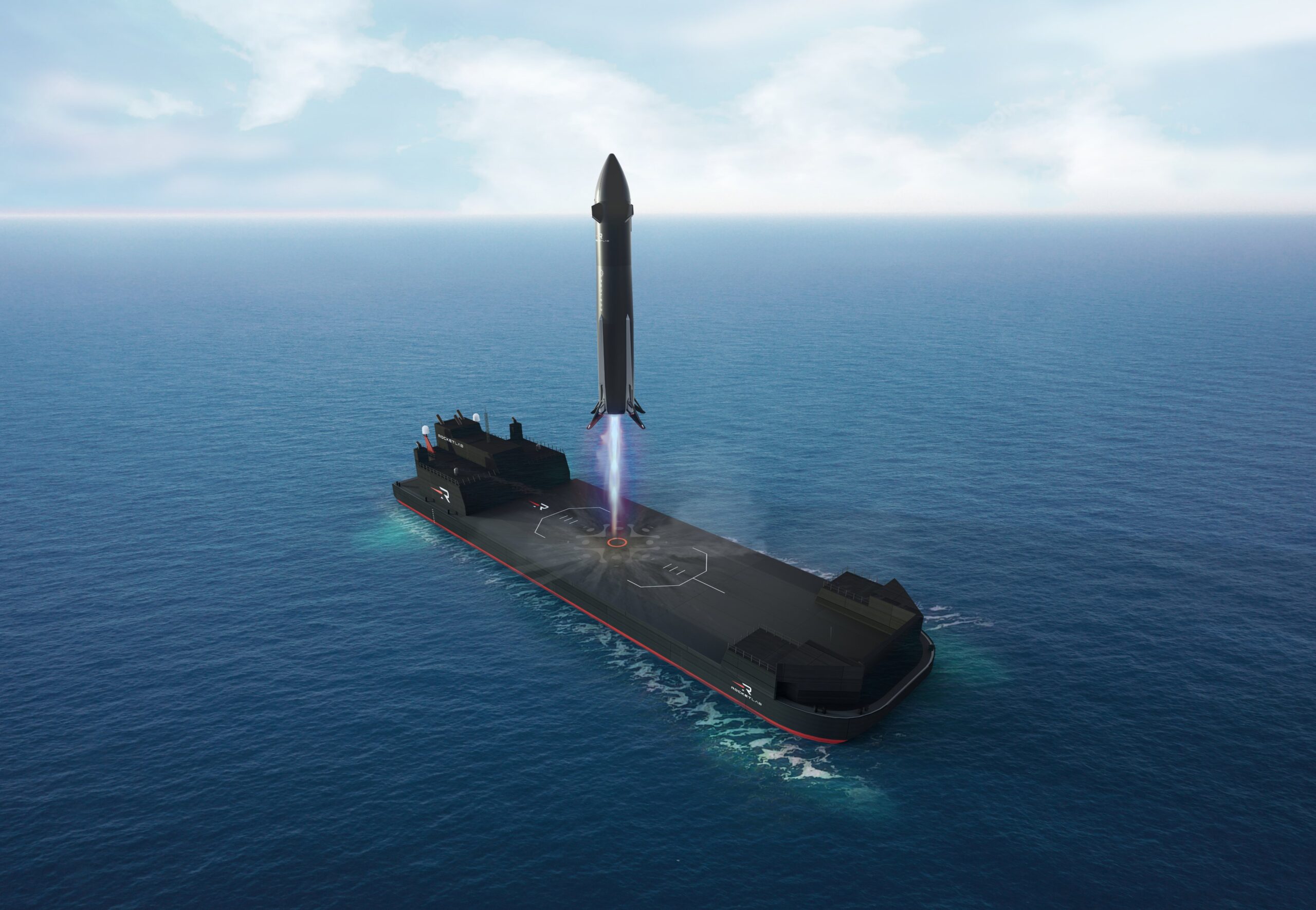
I have sold a number of smaller positions and bought another 1,000 Rocket Lab shares. That takes my holding to 2,000 shares, worth roughly £100,000 at the time of writing and representing about 50% of my portfolio.

This is not a routine rebalance. It is the clearest expression of my current conviction, and it comes with a level of concentration risk that I need to acknowledge plainly.

Why I acted during the sell-off

Rocket Lab shares have fallen sharply. I cannot know precisely what is driving any individual day’s move. One material issue investors are assessing is the proposed Iridium transaction, the financing required to complete it and the potential dilution for existing Rocket Lab shareholders. Those are legitimate concerns, not noise to dismiss because I like the company.

The June 2026 merger agreement gives Iridium shareholders $27.00 in cash plus Rocket Lab stock. It also contemplates a 364-day senior secured bridge facility of up to $3.6 billion. A transaction of that size changes the financial conversation around Rocket Lab, and the market is right to scrutinise it.

My decision was not based on the view that these concerns do not matter. It was based on the view that the sell-off gave me a better entry point into a business whose long-term operating opportunity still looks unusually strong.

What I am underwriting

I see Rocket Lab as more than a launch company. Electron launch, spacecraft systems, components, national-security work and the development of Neutron create several ways for the company to compound if execution remains strong.

The Space Systems business is a major part of the thesis

The part of the business I think can be underestimated is Space Systems. Rocket Lab does not only build hardware for its own missions. Its filings describe a business that designs and manufactures many of the components and subsystems used in its launch vehicles and spacecraft, while also selling spacecraft components into the wider merchant market.

That matters because it creates revenue opportunities beyond Rocket Lab’s own launch cadence. Solar cells, composite structures, separation systems, flight software, reaction wheels, spacecraft buses and other mission-critical components can be supplied to other satellite and space manufacturers. The long-term opportunity is not simply to launch more rockets. It is to participate in more of the value chain when other companies build spacecraft too.

I also like the acquisition strategy behind that ambition. Rocket Lab has been buying capabilities that can deepen vertical integration and solve difficult supply constraints. The completed Mynaric acquisition added laser optical communications technology and strengthened the company’s position in launch services, spacecraft manufacturing and satellite components. The proposed Motiv acquisition would bring solar-array drive assemblies, precision mechanisms and robotics in house, which the company describes as addressing a critical gap in its vertical-integration strategy.

That does not mean every acquisition will work. Integration, capital allocation and execution risk are real, particularly while Rocket Lab is also developing Neutron. But I see a deliberate pattern: buy strategic products and capabilities, reduce dependence on constrained suppliers, use them inside Rocket Lab’s own missions and retain the ability to sell into the broader space market.

The proposed Iridium transaction takes that strategy another step. It would combine Rocket Lab’s launch and spacecraft manufacturing capability with a global satellite communications network and spectrum assets. The financing and dilution questions are therefore not a side issue. They are the price and risk of trying to build a more fully integrated space company.

The most important point is that execution continues to produce evidence. In July, Rocket Lab announced full mission success for VICTUS HAZE, an end-to-end responsive-space mission for the U.S. Space Force. It also announced a full-duration hot-fire test of the Archimedes Vacuum engine, a meaningful development on the path toward Neutron.

Neither milestone removes the risk around Neutron, future funding or the Iridium deal. They do reinforce why I remain interested. The company is trying to become an integrated space business with launch, spacecraft and services capability, rather than a one-dimensional bet on a single rocket.

Why I sold smaller positions

I did not make this change because diversification is bad. Diversification is often sensible, especially when conviction is low or an investor cannot follow every holding closely enough.

For me, the question became whether several smaller positions offered a better prospective return than putting that capital into the company I understand best and feel most committed to following. My answer, at this point in time, was no.

That is a personal judgement, not a universal rule. A concentrated portfolio can be emotionally difficult and financially punishing when the thesis is wrong. I am not presenting this as a safe allocation. I am presenting it as my most honest expression of conviction.

The uncomfortable part of a 50% position

A 50% position changes the emotional reality of investing. A difficult week in Rocket Lab will have a meaningful effect on my portfolio. I will not be able to pretend that volatility is irrelevant, and I should not allow price movement alone to dictate the next decision.

The responsibility is to follow the facts, not defend the purchase. If operational execution weakens, Neutron slips materially, the economics or financing of the Iridium transaction deteriorate, or the overall investment case changes, I need to reassess without anchoring to the size of the position.

What would strengthen or weaken my conviction

  • Strengthen: continued Electron reliability, further national-security execution, tangible Neutron progress and disciplined financing of the Iridium transaction.
  • Weaken: material Neutron delays, operating setbacks, a financing outcome that damages the long-term economics for existing shareholders, or evidence that the acquired assets cannot be integrated as expected.

My view now

I have chosen to be concentrated because I believe Rocket Lab has one of the strongest long-term opportunities in the public space market. That does not make it a certainty. It makes it the position I am most willing to study, hold accountable and accept real volatility in.

The next job is not to celebrate the size of the position. It is to keep testing the reasons I bought it.

Sources: Rocket Lab 2025 Form 10-K; Rocket Lab Q1 2026 Form 10-Q; Rocket Lab’s 29 June 2026 Form 8-K on the proposed Iridium transaction; Rocket Lab’s VICTUS HAZE mission update; Rocket Lab’s Archimedes Vacuum engine test update.

This is personal investing commentary, not financial advice. I own Rocket Lab shares and may buy or sell without updating this post immediately.

View my Portfolio · Read my original Rocket Lab thesis · Browse all RKLB writing

AbCellera (ABCL) 2026 Investment Update: Clinical Proof Is Now the Test

This is an update to my original 2025 AbCellera investment thesis. I am keeping that piece as a record of the original case. This update is about what has changed and what I am watching now.

My ABCL thesis is becoming more specific. The question is no longer only whether AbCellera has an interesting AI-powered antibody-discovery platform. The more important question is whether the company can convert that platform into clinical evidence that changes how investors value the business.

That makes the next set of milestones meaningful. AbCellera expects topline Phase 2 data for ABCL635 in the third quarter of 2026, Phase 1 data for ABCL575 in the fourth quarter, and an IND or CTA submission for ABCL688 in 2027. None of those outcomes is guaranteed. But they give the investment case real events against which it can be tested.

The platform now has to earn clinical credibility

The original attraction of AbCellera was the possibility that its discovery platform, data and integrated capabilities could improve the route from biological target to antibody candidate. That remains the foundation of the story. Platform claims are easier to make than they are to prove, though.

Clinical progress is where the abstraction becomes more concrete. ABCL635 is in a Phase 1/2 study, with the company expecting topline Phase 2 data in the third quarter of 2026. AbCellera has said the Phase 1 portion supported moving into Phase 2 after doses were well tolerated, with no observed liver toxicity or serious adverse events in the interim assessment. That is not proof of commercial success, but it is a more useful signal than a slide deck about platform potential.

ABCL575 is expected to produce Phase 1 topline data in the fourth quarter of 2026. Management has also stated that it currently has no plans to develop that programme beyond Phase 1. I read that as a reminder that not every programme has to become a blockbuster for the platform to create value. It also means I should not give ABCL575 more weight in the thesis than the evidence justifies.

There is more than one shot on goal

What still appeals to me is that AbCellera is not purely a single-asset biotech story. The company has partner programmes and royalty interests alongside its own internal pipeline. ABCL688, an autoimmune candidate from its GPCR and ion-channel platform, is expected to move toward an IND or CTA submission in 2027.

That does not eliminate risk. Partner activity, milestone revenue and royalty economics can be difficult to forecast. The value of multiple shots on goal is not that every one succeeds. It is that the company has several routes through which its discovery and development capabilities could create value over time.

The balance sheet buys time, not certainty

At 31 March 2026, AbCellera reported $504.7 million in cash, cash equivalents and marketable securities. That is a meaningful resource for a company investing in internal programmes and infrastructure. It gives management time to pursue the upcoming clinical milestones without making the next quarter the only thing that matters.

It should not be treated as a free pass. Cash, equivalents and marketable securities were $533.8 million at the end of 2025, and AbCellera remained loss-making in the first quarter. Revenue increased to $8.3 million from $4.2 million in the prior-year quarter, but I view that cautiously because the company’s revenue can be milestone-driven and uneven.

What would strengthen my conviction

  • ABCL635 produces credible Phase 2 data and the data supports a clear development path.
  • ABCL575 delivers a clean Phase 1 readout, even if the strategic value is primarily platform validation.
  • ABCL688 progresses toward its planned 2027 filing.
  • The company demonstrates that partner activity and internal programmes can coexist without the platform becoming an expensive science project.

Where I could be wrong

  • Early clinical signals may not translate into meaningful efficacy or commercial value.
  • Clinical timelines can slip, data can disappoint and development costs can rise.
  • AbCellera has no marketed proprietary drugs, so the internal-pipeline case remains unproven.
  • Partner fees and milestones can make revenue volatile and difficult to model.

My view now

I still see ABCL as a high-risk, high-uncertainty holding. The reason I remain interested is not a claim that the platform has already won. It is that the next twelve to eighteen months should produce clearer evidence about whether AbCellera can turn an interesting discovery engine into a clinically validated and commercially relevant business.

That is the test. If the clinical milestones strengthen the case, the platform narrative becomes more credible. If they do not, I need to be willing to reassess the thesis rather than defend the original idea.

Sources: AbCellera Q1 2026 Form 10-Q; my original 2025 ABCL investment thesis.

This is my personal investing commentary, not financial advice. I may own shares in AbCellera and can change my view as new information emerges.

View my Portfolio · Browse all ABCL writing

BETA Technologies (BETA) Investment Thesis: Aircraft, Charging and Commercial Validation

This is my current investment thesis, not financial advice. I own BETA Technologies in my main portfolio and the position can change.

BETA Technologies is not a conventional aerospace investment. It is still early in commercialisation, still loss-making and still dependent on certification and execution. That is exactly why the opportunity is interesting to me. The company is trying to turn electric aviation from a promising concept into an operating system of aircraft, charging and manufacturing.

The part of the thesis I find most compelling is not simply vertical take-off aircraft. It is BETA’s ability to build relationships around the conventional take-off ALIA variant, where payload and practical operations may offer a clearer route into early commercial use. The charging ecosystem is equally important. Aircraft without dependable infrastructure are much harder to deploy at scale.

A more practical route into electric aviation

BETA is developing the ALIA in both conventional take-off and landing, or CTOL, and vertical take-off and landing, or VTOL, configurations. The conventional variant matters to me because it can address real logistics and regional-aviation use cases without asking operators to solve every part of the VTOL challenge on day one.

A useful payload and straightforward airport operations can make the first customer conversations more concrete. Rather than selling a distant vision of urban air mobility, BETA can work with operators that have existing routes, maintenance needs and infrastructure decisions to make now.

BETA’s own product site states a demonstrated range of 336 nautical miles, cargo capacity of 200 cubic feet and charge times of under one hour. These are company-reported figures, not guarantees of commercial economics. They do, however, show why the ALIA has a different feel from a purely conceptual eVTOL programme.

The charging ecosystem is part of the product

The aircraft is the visible part of the story. The more important question may be whether BETA can help customers operate a fleet. Its Charge Cube infrastructure, manufacturing capability and focus on deployment create the possibility of a more integrated proposition.

That matters because early electric aviation cannot rely on a fully built public network appearing by itself. Operators need aircraft, charging, maintenance, locations and a credible pathway through certification. If BETA can make those pieces work together, it may reduce the friction that slows adoption for everyone else.

The bull case is not simply that electric aircraft will exist. It is that BETA can make electric flight practical enough for real operators to introduce it before the wider market catches up.

Commercial and defence validation

Early relationships matter in a business like this. BETA’s website says it has an established customer base and more than 800 aircraft in backlog. I would not treat all of that as equivalent to firm, funded deliveries. The distinction between orders, options, deposits and delivered aircraft matters enormously.

There are more tangible points to watch. In March 2026, BETA announced that Surf Air Mobility had placed a firm order for 25 ALIA aircraft, with options for up to 75 more. The company also points to defence engagements and partner relationships. These do not remove the execution risk, but they are evidence that serious operators are engaging with the platform.

The financial reality

This remains a venture-style aerospace investment, even as a public company. In Q1 2026, BETA reported revenue of $10.1 million, a net loss of $122.3 million and cash of $1.59 billion. That cash balance provides time, but the company still needs to deliver against certification, production and customer milestones before it can demonstrate a self-sustaining commercial model.

What could break the thesis

  • Certification delay: timelines can slip, and aviation approvals are not a formality.
  • Production execution: building a few aircraft and manufacturing reliably at scale are different challenges.
  • Order quality: backlog, options and partnership announcements must turn into funded deliveries.
  • Cash burn and dilution: commercialisation takes time and capital.
  • Infrastructure adoption: charging only becomes a moat if customers actually deploy and use it.

My current view

I own BETA because it appears to be building a practical entry point into electric aviation, not just an aircraft for a future market. The CTOL variant, useful payload, customer relationships and charging infrastructure are the pieces I think could matter most.

I will be watching certification progress, firm deliveries, operator utilisation, charging deployments and the cash runway. This is a high-risk position. The upside depends on BETA proving that the aircraft, infrastructure and customer economics can work together in the real world.

For the wider context, see my current portfolio. The financial figures cited above come from BETA’s Q1 2026 Form 10-Q. Product specifications and partnership information are from BETA Technologies.

NVIDIA (NVDA) Investment Thesis: Scale, Execution and Earnings Power

This is my current investment thesis, not financial advice. I own NVIDIA in my main portfolio and the position can change.

The reason I continue to own NVIDIA is not simply that AI is a large theme. It is that NVIDIA has repeatedly shown an ability to turn a technological lead into an operating machine: products that customers want, supply that has to be coordinated at extraordinary scale, and earnings power that follows when the company executes.

That is the heart of my bull case. The next few years will not be decided by whether AI matters. They will be decided by which businesses can keep delivering the computing, networking and systems customers need as the buildout becomes more demanding.

Execution at a scale that is hard to ignore

NVIDIA’s latest quarterly filing illustrates the scale of the current opportunity. For the quarter ended 26 April 2026, the company reported revenue of $81.6 billion, up 85.2% year on year. Net income was $58.3 billion, compared with $18.8 billion in the comparable prior-year quarter.

Numbers at that level can make a thesis look obvious after the event. They are not. The reason they matter to me is that they reflect execution across a difficult chain: silicon design, manufacturing capacity, memory, networking, systems integration, customer deployment and software support. It is one thing to make a fast chip. It is another to help customers build and operate AI infrastructure at enormous scale.

More than a GPU supplier

I do not see NVIDIA purely as a seller of individual GPUs. The company’s position is strengthened by the wider stack around accelerated computing: systems, high-speed networking and the CUDA software ecosystem that many developers and organisations already use.

That does not mean customers cannot change suppliers. They can, and they will keep trying to improve economics. But moving a serious AI workload is not always as simple as comparing the headline price of two chips. Software tools, developer familiarity, model performance, networking and the operational cost of changing a production environment all matter.

The bull case is not that NVIDIA wins every AI workload forever. It is that its scale and execution keep it central to the most important workloads long enough for the earnings power to compound.

The architecture cycle is part of the thesis

One of the reasons I find NVIDIA interesting is the cadence of the platform cycle. Customers are not just making a one-off purchase. They are trying to build capacity for models, inference, agents and applications that are changing quickly. If NVIDIA can keep making each generation valuable enough to justify upgrades, the opportunity is larger than a single hardware refresh.

The company’s supply commitments show how much planning this requires. As of 26 April 2026, NVIDIA disclosed $119 billion of supplier commitments, with most expected to be paid during fiscal 2027. That is not proof of future demand, and it increases the importance of execution. It does show the physical scale behind the AI buildout.

What could challenge the thesis

  • Demand digestion: customers may pause after a period of exceptionally heavy infrastructure spending.
  • Competition and custom silicon: hyperscalers, AMD and other suppliers have strong incentives to reduce dependency and improve their own economics.
  • Export controls and China: policy can affect which products can be sold and where future growth comes from.
  • Infrastructure constraints: data-centre capacity, power and customer financing all matter. Demand for chips alone is not enough if the wider buildout stalls.
  • Expectations: a company producing exceptional results can still be a poor investment if the valuation assumes too much perfection.

My current view

I own NVDA because I think its scale, product execution and ability to turn an AI infrastructure cycle into earnings are still unusual. The growth is already visible. The investment question is whether the company can maintain its central role as customers become more sophisticated, competitors improve and the market starts to separate durable demand from short-term enthusiasm.

I will keep watching revenue quality, gross margins, customer spending behaviour, platform transitions and the willingness of customers to build around NVIDIA’s broader stack. The thesis is strong, but it is not a reason to ignore the price paid or the risk that this cycle eventually slows.

For the wider context, see my current portfolio. The financial figures cited above come from NVIDIA’s Q1 fiscal 2027 Form 10-Q.

Palantir (PLTR) Investment Thesis: Why AIP Commercial Adoption Matters Most

This is my current investment thesis, not financial advice. I own Palantir in my main portfolio and the position can change.

My interest in Palantir is not simply that it is an AI company. There are plenty of companies that can claim that label. The question I find more interesting is whether Palantir’s Artificial Intelligence Platform, or AIP, can become durable commercial infrastructure inside large organisations.

That is the part of the bull case I care about most. If AIP is helping customers move from experimentation into real workflows, it has a chance to become more than an AI feature or a short-lived spending cycle. It could become a platform that sits underneath important decisions, operations and automation.

The commercial adoption question

Palantir’s latest filed quarterly results give the thesis some substance. For the three months ended 31 March 2026, the company reported total revenue of $1.63 billion, compared with $884 million in the comparable period a year earlier. Commercial revenue was $774 million, up from $397 million.

Those numbers alone do not prove a long-term moat. Fast growth can attract a lot of attention, and it can make any valuation look more forgiving than it really is. But they do suggest that the commercial story is no longer just an aspirational slide in an investor presentation.

For me, the key question is what customers are actually buying. If they are mainly paying for short pilots and AI enthusiasm, the revenue can fade when budgets tighten. If they are using AIP to connect data, people and workflows in ways that are difficult to remove, the economics could be very different.

Why AIP could matter

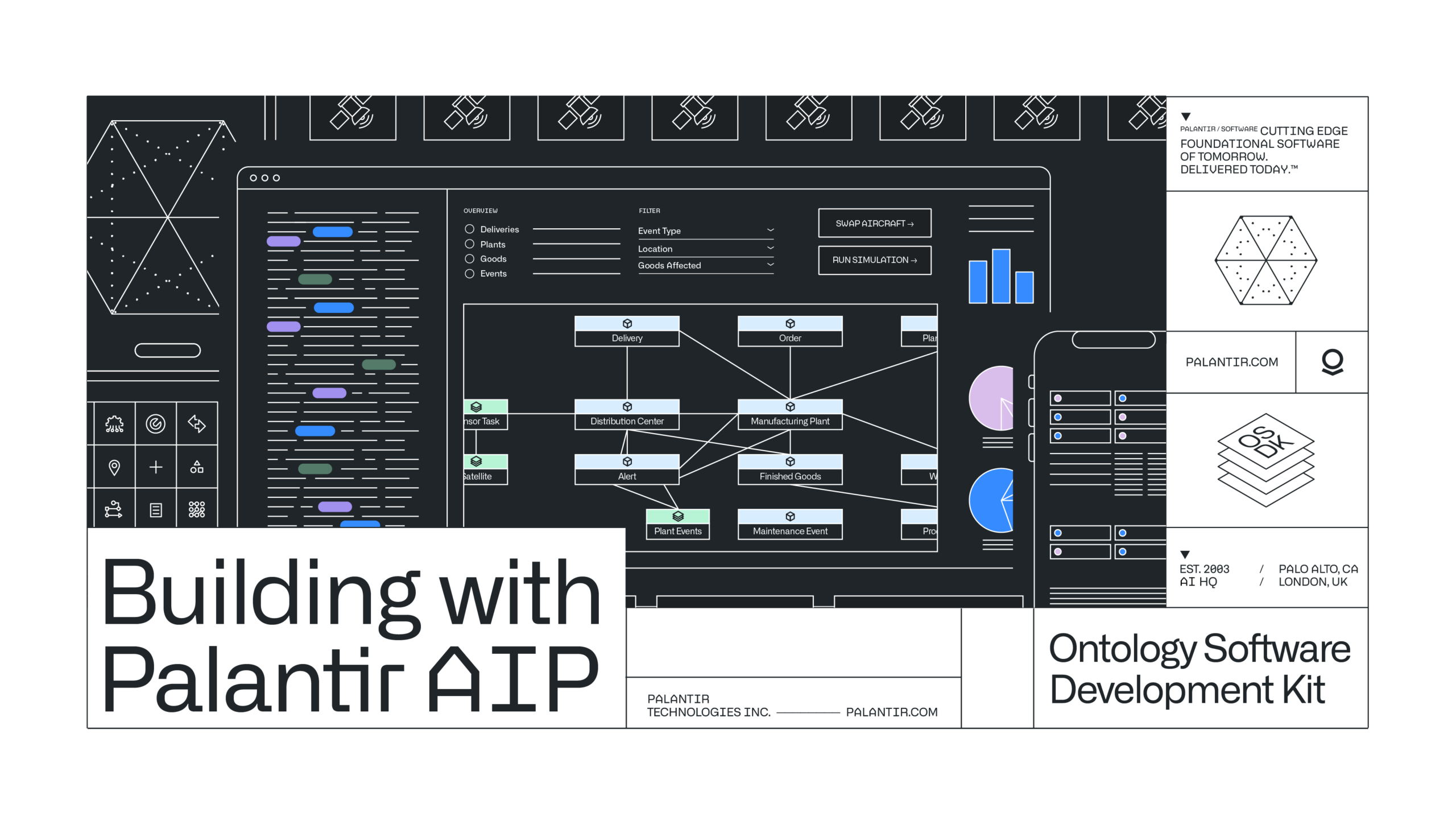
Palantir describes AIP as a platform that connects large language models to an organisation’s data, permissions, workflows, agents and governance. That matters because most companies do not need another chatbot. They need a way to use AI in real operating environments without losing control of their data or creating unmanageable risk.

The potential appeal is that Palantir already has the components around the model layer. Foundry helps organisations map and work with data, the Ontology gives that data operational context, and Apollo supports deployment across complex environments. If those pieces work together in practice, AIP can be more useful than a standalone model interface.

The bull case is not that every company will buy more AI software. It is that a smaller number of important customers will build Palantir into workflows they do not want to unwind.

What I would watch from here

  • Commercial growth quality: whether growth remains strong as deployments mature, rather than relying on a small number of highly visible wins.
  • Customer depth: whether customers expand from pilots into repeatable, material programmes.
  • Operating leverage: whether revenue growth continues to translate into disciplined profitability and cash generation.
  • Remaining performance obligations: the company reported $4.5 billion at the end of Q1 2026, which is useful context, but not the same thing as recognised revenue.

The risks I do not want to ignore

The valuation risk is obvious. A business priced for exceptional execution leaves little room for disappointment. Commercial growth slowing, customers choosing cheaper or more open alternatives, or the market deciding that AI budgets were pulled forward would all challenge the thesis.

I also keep an eye on stock-based compensation. Palantir recorded $202 million in stock-based compensation in Q1 2026. That does not invalidate the business, but it matters when judging how much of the reported progress ultimately belongs to shareholders.

There is also a genuine execution question. Palantir operates in competitive markets and has to prove that its platform can scale commercially without becoming too dependent on a narrow group of customers or on an unusually favourable AI spending environment.

My current view

I own PLTR because I think AIP has a credible path to becoming operational software rather than a superficial AI add-on. The commercial growth is encouraging, but the enduring thesis depends on adoption becoming deeper and stickier over time.

This is therefore a thesis I want to revisit through customer expansion, commercial durability, margins and the valuation the market is asking me to pay. I am not assuming the outcome. I am watching for evidence that the platform is becoming harder to replace as it becomes more embedded.

For context on how this fits into the wider picture, see my current portfolio. The financial figures cited above come from Palantir’s Q1 2026 Form 10-Q.