
This is my current investment thesis, not financial advice. I own Palantir in my main portfolio and the position can change.
My interest in Palantir is not simply that it is an AI company. There are plenty of companies that can claim that label. The question I find more interesting is whether Palantir’s Artificial Intelligence Platform, or AIP, can become durable commercial infrastructure inside large organisations.
That is the part of the bull case I care about most. If AIP is helping customers move from experimentation into real workflows, it has a chance to become more than an AI feature or a short-lived spending cycle. It could become a platform that sits underneath important decisions, operations and automation.
The commercial adoption question
Palantir’s latest filed quarterly results give the thesis some substance. For the three months ended 31 March 2026, the company reported total revenue of $1.63 billion, compared with $884 million in the comparable period a year earlier. Commercial revenue was $774 million, up from $397 million.
Those numbers alone do not prove a long-term moat. Fast growth can attract a lot of attention, and it can make any valuation look more forgiving than it really is. But they do suggest that the commercial story is no longer just an aspirational slide in an investor presentation.
For me, the key question is what customers are actually buying. If they are mainly paying for short pilots and AI enthusiasm, the revenue can fade when budgets tighten. If they are using AIP to connect data, people and workflows in ways that are difficult to remove, the economics could be very different.
Why AIP could matter
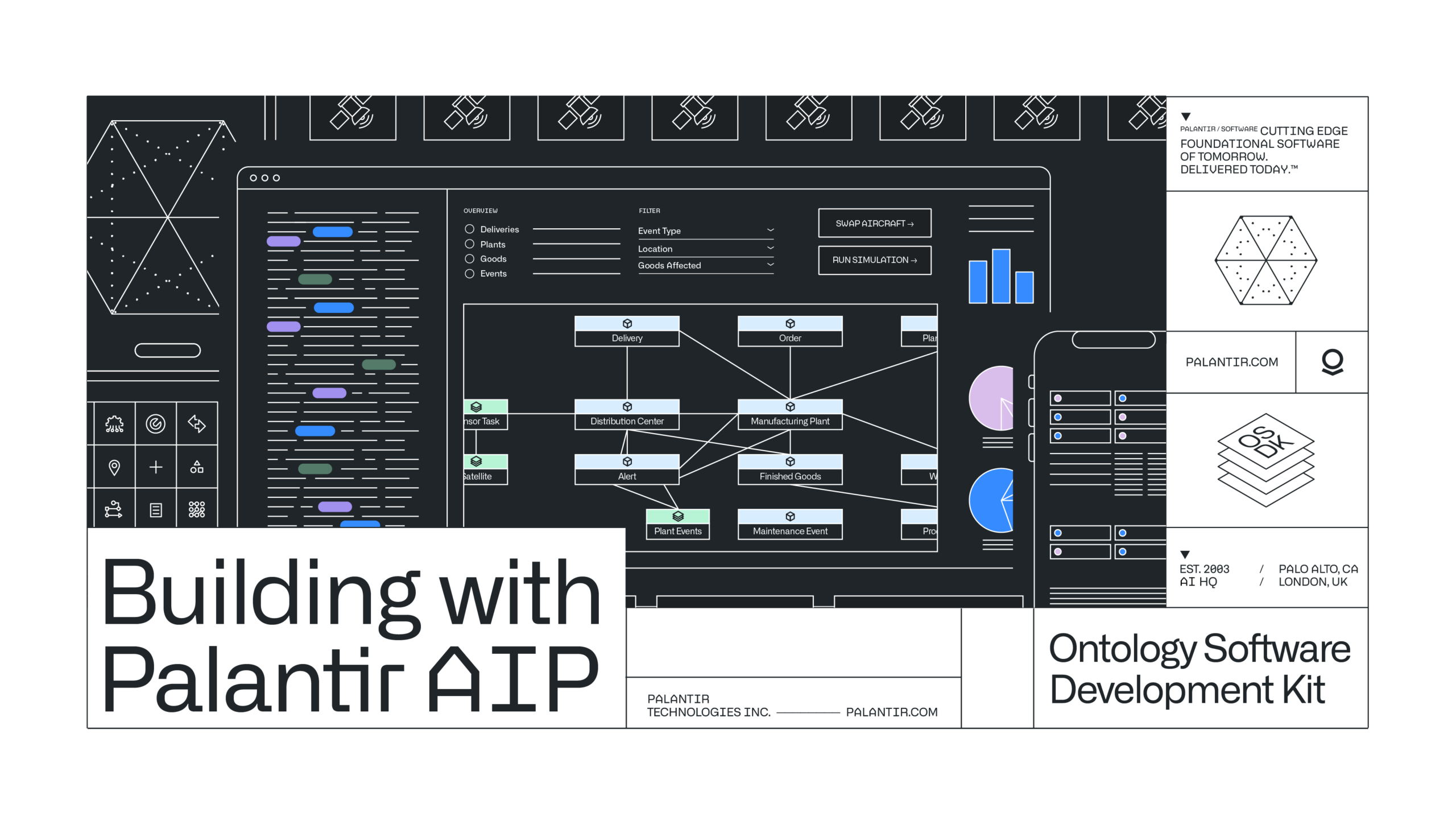
Palantir describes AIP as a platform that connects large language models to an organisation’s data, permissions, workflows, agents and governance. That matters because most companies do not need another chatbot. They need a way to use AI in real operating environments without losing control of their data or creating unmanageable risk.
The potential appeal is that Palantir already has the components around the model layer. Foundry helps organisations map and work with data, the Ontology gives that data operational context, and Apollo supports deployment across complex environments. If those pieces work together in practice, AIP can be more useful than a standalone model interface.
The bull case is not that every company will buy more AI software. It is that a smaller number of important customers will build Palantir into workflows they do not want to unwind.
What I would watch from here
- Commercial growth quality: whether growth remains strong as deployments mature, rather than relying on a small number of highly visible wins.
- Customer depth: whether customers expand from pilots into repeatable, material programmes.
- Operating leverage: whether revenue growth continues to translate into disciplined profitability and cash generation.
- Remaining performance obligations: the company reported $4.5 billion at the end of Q1 2026, which is useful context, but not the same thing as recognised revenue.
The risks I do not want to ignore
The valuation risk is obvious. A business priced for exceptional execution leaves little room for disappointment. Commercial growth slowing, customers choosing cheaper or more open alternatives, or the market deciding that AI budgets were pulled forward would all challenge the thesis.
I also keep an eye on stock-based compensation. Palantir recorded $202 million in stock-based compensation in Q1 2026. That does not invalidate the business, but it matters when judging how much of the reported progress ultimately belongs to shareholders.
There is also a genuine execution question. Palantir operates in competitive markets and has to prove that its platform can scale commercially without becoming too dependent on a narrow group of customers or on an unusually favourable AI spending environment.
My current view
I own PLTR because I think AIP has a credible path to becoming operational software rather than a superficial AI add-on. The commercial growth is encouraging, but the enduring thesis depends on adoption becoming deeper and stickier over time.
This is therefore a thesis I want to revisit through customer expansion, commercial durability, margins and the valuation the market is asking me to pay. I am not assuming the outcome. I am watching for evidence that the platform is becoming harder to replace as it becomes more embedded.
For context on how this fits into the wider picture, see my current portfolio. The financial figures cited above come from Palantir’s Q1 2026 Form 10-Q.