Rome Resources (AIM: RMR): Why Resource Definition Matters More Than Headline Potential

Rome Resources is a high-risk exploration thesis, not a recommendation. I am assessing it as a personal investor by asking a narrower question than “could this become a big tin story?”: can the Kalayi discovery move from an early geological promise to an asset with a defined, financeable development path?

The distinction matters. A small explorer can produce exciting drill results and still fail to create durable value if resource confidence, tenure, metallurgy, funding or on-the-ground execution do not follow. For RMR, the headline potential is interesting. The investable work is in the proof still required.

The project and what is verified today

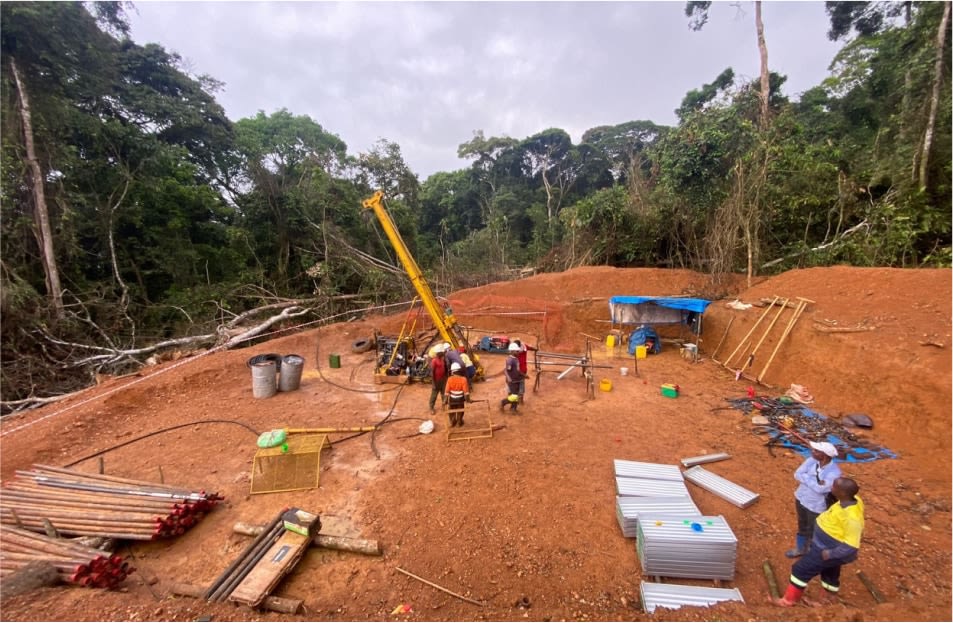
Rome Resources describes Kalayi as part of its Bisie North tin project in North Kivu, Democratic Republic of Congo. The company’s official project page places it near the Bisie Ridge, but proximity to established mines or other prospects is not evidence that Kalayi itself is economic. Each deposit has to earn that conclusion through its own drilling, engineering, recovery work, permitting and financing.

The key recent factual step is the company’s 2 September 2026 updated mineral resource announcement, which reported a 45% increase in contained tin. Management has also highlighted improved grade. That is the right direction, but the Kalayi estimate remains an Inferred Mineral Resource, not a reserve. It is therefore an early confidence category, not a mine plan and not proof of future extraction or profitability.

Why resource definition and grade matter

Contained-metal growth can attract attention, yet the more important question is what sits underneath the headline. Better definition can clarify continuity, geometry, thickness and the distribution of higher-grade zones. Higher grade can help a future project, because it may improve the amount of payable metal recovered per tonne processed. Neither outcome should be assumed from a resource headline alone.

For a remote tin project, the eventual economics will depend on far more than grade: mineable shapes, dilution, recovery, processing design, concentrate quality, transport, sales terms, capital intensity and operating costs all matter. I would rather see RMR turn uncertainty into successive technical evidence than rely on comparisons with nearby operations.

The milestones that would strengthen the case

  • Resource confidence: drilling that improves the density and continuity of the Kalayi data set, with a transparent explanation of how the resource model changes.
  • Grade and metallurgy: repeatable results that show whether mineralisation can be recovered into a saleable concentrate, rather than isolated high-grade observations.
  • Licence conversion: evidence that the current programme supports conversion of PEPM 13274 into a full mining licence. The company’s 15 June 2026 announcement makes clear that conversion remains a programme and process, not a completed outcome.
  • Ownership consolidation: progress on the proposed increase in Kalayi ownership only once its conditions are actually satisfied. An expected ownership rise is not the same as an owned interest today.
  • Capital discipline: a funding plan that matches the scale and duration of exploration, technical studies, permitting and site execution without making the share count an afterthought.

What would weaken it

  • Drilling that expands tonnage without improving confidence, continuity or practical mineability.
  • Metallurgical or concentrate results that make recovery, marketing or transport harder than the geological story suggests.
  • Delays or conditions around licence conversion, ownership consolidation or local operating permissions.
  • Financing that repeatedly extends the runway while creating substantial dilution or leaving a material warrant overhang.
  • A deterioration in security, logistics or jurisdictional conditions in North Kivu.

Where I could be wrong

The optimistic case could be wrong because an Inferred resource may not convert into a mineable, higher-confidence inventory on attractive terms. It could also be wrong because licence conversion and any ownership increase are conditional, rather than completed facts. North Kivu brings material security, logistics and jurisdiction exposure that cannot be diversified away at project level.

Funding is another central risk. Exploration cash is limited relative to the work that would be needed to de-risk, study and develop a remote project. The company’s half-year results and September 2026 financing announcement should be read with that in mind. Future capital will be needed, and dilution plus a warrant overhang can be very material for shareholders.

Finally, the usual development risks are not background noise here. Remote execution, metallurgy, concentrate marketing and the tin price can each change the value of the same geological asset. A stronger resource estimate would be helpful, but it would not neutralise those risks.

My monitoring checklist

  • Does each drilling update add confidence and continuity, not just a larger headline?
  • Are grade, width, recovery and concentrate specifications moving toward a coherent processing case?
  • Has the mining-licence conversion moved from programme to verified outcome?
  • Have the conditions for the proposed ownership increase been met, and on what terms?
  • How much cash is available, what warrants remain outstanding, and what work is funded before the next raise?
  • Are security, logistics and operating conditions in North Kivu improving, stable or worsening?
  • Does the tin market support a plausible development case without requiring an exceptional price environment?

Bottom line

RMR is interesting to me because Kalayi’s resource growth and improved grade create a more substantial technical question than the earlier discovery-stage story. The thesis is not that a resource update makes the project economic. It is that disciplined resource definition, credible permitting progress, ownership clarity and adequately funded execution could make the answer clearer over time.

Until then, this belongs in the speculative end of a portfolio process. Readers can see how I frame individual holdings and risk at the Portfolio page.

Disclaimer

This article records a personal research view, not investment advice or a recommendation to buy, sell or hold any security. Small-cap exploration companies can be highly volatile and investors can lose all of their capital. Verify primary disclosures, consider your own circumstances and seek regulated advice where appropriate.


7 One-Person Businesses You Can Start With Under £500

Starting with a small budget can be useful. It forces a better question than “what business could make the most money?”

The better question is: what is the cheapest credible test of a problem that somebody may pay to solve?

£500 does not buy a business. It does not buy demand, trust, skills, insurance, a laptop, a vehicle or the time required to learn. What it can buy is a disciplined first experiment: a clear offer, a basic way to reach customers and enough room to find out whether the model deserves more time.

I would not use a small budget to chase “passive income”. I would use it to test one defined customer problem, keep the fixed costs low and learn where the real constraint sits. Sometimes that constraint is customer acquisition. Sometimes it is delivery capacity, regulation, support or simply the fact that the work is less attractive once it becomes real.

What “under £500” actually means

The figures below are illustrative launch budgets for someone who already has a usable phone and computer. They exclude wages, a vehicle, stock commitments, working capital, advertising spend, insurance premiums, tax and any sector-specific licence, qualification or permit. A model can be cheap to start and still be expensive to run well.

For a UK sole trader, the £1,000 trading allowance is based on gross trading income, not profit. Once trading income exceeds that threshold, registration and record-keeping obligations can apply. VAT is a separate rolling turnover test, not a profit test. These rules change, so use the official links at the end of this article rather than treating this as individual tax advice.

The seven models, compared honestly

ModelLean test budgetFirst customer routeReal constraint
Productised freelance service£15–£145Specific outreach and referralsFounder time and scope creep
Local coordination service£40–£197 before insuranceLocal operators and direct relationshipsReliability, access and liability
Simple workflow automation£40–£192One low-risk admin processData, maintenance and support
Digital product£0–£200Existing audience or clear problemDemand and distribution
Niche newsletter£0–£200Useful public writing and opt-inEditorial consistency and trust
Print-on-demand£50–£350Defined community or creator partnershipsMargins, quality and IP
Niche content library£50–£300Search, distribution and emailSlow feedback and sustained production

1. Productised freelance service

This is the most straightforward model on the list. The key is to sell a defined outcome to a defined type of buyer, rather than presenting yourself as available for every kind of work.

Examples could include a monthly Google Business Profile update pack for local trades, a fixed-scope website-copy refresh for independent accountants or a recurring reporting spreadsheet for a small service firm. The offer needs a clear deliverable, a revision limit, a turnaround time and a price.

The initial budget can be modest: a domain and email, a simple portfolio of three representative samples, basic proposal and invoice templates, and a small amount of direct outreach. The difficult part is not setting these up. It is finding a problem that a buyer recognises and trusts you to solve.

First test: choose one buyer type, build three relevant samples and offer one paid, tightly scoped project. Do not give away the entire service as a “trial”.

Where it breaks: bespoke requests, endless revisions and a pipeline built only on chasing strangers. Productisation only works when the work genuinely becomes repeatable.

2. Local cleaning or routine-maintenance coordination

This is not a generic “start a cleaning business” suggestion. A more defensible version is a narrow local coordination service: for example, turnover cleaning and minor-maintenance coordination for a specific group of serviced accommodation hosts or small offices.

The operator’s value is in a reliable process: finding vetted providers, agreeing a job specification, managing access, collecting a photo report and dealing with exceptions. Early on, the cleanest commercial arrangement may be for the client to pay the provider directly while the coordinator invoices a transparent management fee.

First test: secure two or three dependable providers before advertising, then offer a defined pilot for one local property type.

Where it breaks: no-shows, key handling, quality disputes, scattered geography and unclear responsibility when something goes wrong. This is operational work, not passive income. It also becomes much more complex if you take client funds, move waste, employ people or arrange regulated trades.

3. Simple workflow automation service

There is a real opportunity in helping small businesses tidy up repetitive, low-risk administration. There is far less credibility in claiming to sell a vague “AI agent” that replaces staff or makes important decisions without oversight.

A useful first offer might connect an enquiry form to a spreadsheet or CRM, send a simple acknowledgement, create an internal task and produce a weekly summary. The client should own the relevant software accounts and payment details. That keeps the ongoing cost visible and makes a proper handover possible.

First test: map one real process with a clear trigger, output, human approver and failure path. Use dummy data for demonstrations.

Where it breaks: poorly understood client processes, live personal data, changing software permissions and support requests that outgrow the original setup fee. If personal data is involved, the client and provider need to understand their data-protection roles and document the arrangement appropriately.

4. Digital products

Digital products can have attractive marginal economics because there is no physical inventory to replenish. That does not make them easy. A generic template or short guide with no obvious buyer problem is simply a file on the internet.

The strongest starting point is an asset that comes from specific experience or repeated customer questions: a spreadsheet, checklist, database, planning tool or guide that saves a buyer time or reduces an avoidable mistake. Platforms can keep fixed costs low, but transaction and discovery fees still affect the economics. Gumroad, for example, charges a fee on each sale, while other platforms use different payment and merchant-of-record models.

First test: describe the outcome before creating the full product. Offer a sample, speak to likely users and see whether anyone will exchange an email address, feedback or money for it.

Where it breaks: treating creation as validation, ignoring refunds and support, or assuming a platform will create distribution for you. Consumer rules also matter. For digital content supplied immediately, cancellation rights can only be handled in a specific way with the buyer’s express consent and acknowledgement.

5. Niche newsletter

A newsletter is best understood as an owned media asset. It can eventually support subscriptions, sponsorships, products or services, but those outcomes depend on a reader trusting that each edition is worth opening.

A strong niche has a recurring information need and a reason for readers to hear from you rather than a larger publisher. It might be a local business sector, a profession with changing rules, a practical hobby or a carefully defined research beat. Publishing platforms can be free to start, but the real cost is the repeated work of research, writing, list hygiene and audience service.

First test: write several useful public pieces on the same narrow topic and invite readers to opt in for a focused recurring briefing.

Where it breaks: an overly broad promise, no distribution plan and the temptation to buy an email list. Marketing-email rules require a lawful route to contact individuals and a real unsubscribe process. Trust is the asset.

6. Print-on-demand

Print-on-demand removes the need to buy a garage full of stock. It does not remove the need for a distinctive idea, good product samples, customer service and enough margin after fulfilment, shipping, platform fees and refunds.

This can work when the product is designed for a defined community rather than a broad marketplace. A small collection for a niche sport, local identity or professional in-joke may have a more credible acquisition route than a catalogue of generic motivational designs.

First test: order samples, test quality and delivery before asking others to buy. Check intellectual-property rights before using any phrase, image or reference that is not your own.

Where it breaks: thin margins, supplier failures, returns and a design that is either unremarkable or legally risky. No inventory does not mean no operational responsibility.

7. Niche content library

A content site is the slowest model here. I would not build one around the hope that display advertising creates easy income. Search visibility takes time, platforms change and a useful archive demands updates.

The better use of a niche content library is as an audience and trust layer. It can support a newsletter, a service, a digital product or carefully disclosed affiliate recommendations. That makes the economics more coherent than relying on early advertising revenue.

First test: publish a small cluster of genuinely useful pages around a narrow question and measure whether people read, subscribe, reply or ask for help.

Where it breaks: producing a large volume of thin content, mistaking impressions for demand and waiting too long to speak to actual readers.

How I would choose between them

There is no universally best model. The useful choice is the trade-off you can sustain.

  • If you have a valuable skill and can tolerate selling, start with a productised service.
  • If you enjoy systems and understand low-risk operations, test a simple workflow-automation offer.
  • If you have local relationships and can manage exceptions, a tightly defined coordination service may be viable.
  • If you have a specific asset or audience insight, test a digital product.
  • If you can reliably research and write for a narrow group, build a newsletter or content library over time.
  • If you have a genuine community insight and an eye for product quality, test a small print-on-demand collection.

In every case, I would keep the first test reversible. Avoid annual software commitments, large inventory orders, complicated corporate structures and broad paid advertising before a real customer has shown that the problem matters.

Where I could be wrong

A low launch budget can make a model look more accessible than it is. Someone may have the cash but not the credibility, sales ability, qualifications, local network or appetite for uncertainty that the model requires. Equally, a higher-cost business can be the better fit if it solves a real problem and the operator understands the market.

The goal is not to start something because it can technically be launched for under £500. The goal is to learn, cheaply and honestly, whether there is a repeatable exchange of value worth building on.

Useful next steps

  • Choose one model, one buyer and one specific problem.
  • Write down the smallest paid test you could run in the next 30 days.
  • List the assumptions that have to be true for it to work.
  • Speak to prospective customers before committing serious capital.
  • Keep records from the first transaction and review the tax, consumer-law and data-protection implications that apply to your model.

This is general educational information, not legal, tax, financial or business advice tailored to your circumstances. Rules, fees and thresholds can change. Check the official sources below and take professional advice where the risk or commitment is material.

Sources and further reading

Related: The Business of Financial Freedom, Financial Independence and the £1m Path Calculator.

Surf Air Mobility (SRFM) Investment Thesis: Can Aviation Software Become the Real Business?

Personal investor framing: I am not treating Surf Air Mobility as an imminent electric-aircraft story. The question I find more investable, and still highly speculative, is whether a real operating airline can become the proving ground for aviation software that other operators will pay to use. Everything else has to be judged against the company’s financing and execution risks.

What the business is today

Surf Air Mobility operates scheduled regional airline services and on-demand private charter, while developing SurfOS software and pursuing aircraft electrification. It is not a software company with established recurring revenue, and it is not a certified electric regional-aircraft operator.

For the quarter ended 30 June 2026, the company reported $29.5 million of revenue, up 8% year on year. Scheduled-service revenue was $17.4 million, down 19%, while Surf On Demand private-charter revenue was $12.1 million, up 101%. The 10 August 2026 results release reported a $28.1 million net loss and a $10.5 million adjusted EBITDA loss. Those figures show both the operational base and the distance still to travel.

BETA ALIA electric aircraft featured on Surf Air Mobility website, source: Surf Air Mobility
Official Surf Air Mobility website image of a BETA ALIA aircraft. Source: Surf Air Mobility.

Why SurfOS could matter

A software layer that improves dispatch, recordkeeping, brokerage or utilisation could have better incremental economics than owning and operating aircraft. Internal airline operations generate flights, dispatch decisions, maintenance records and workflow problems in the real world. If the product works for independent operators, that operational evidence becomes more valuable.

Two dated signals are worth separating from promotional language. On 25 June 2026, Surf Air announced Wheels Up as launch customer for Enterprise BrokerOS. That is external-customer validation, not proof of scaled recurring revenue. On 26 August 2026, Surf Air announced that the FAA had named OperatorOS an authorised system for electronic signatures and recordkeeping for the company’s airlines. That is a practical workflow milestone, not blanket FAA approval of every software use case or a guarantee of commercial adoption.

The actual investment case

My base case is not that electrified regional aviation arrives quickly enough to rescue the economics. It is that airline operations become less capital-intensive and more resilient, while SurfOS earns a right to be evaluated as a separate aviation-software opportunity. If external customers pay, renew and expand, the market may eventually be able to value more than an airline with a difficult balance sheet.

That needs operational improvement, third-party software adoption and adequate funding without repeated unacceptable dilution. The 10-Q for the quarter ended 30 June 2026 reported a $48.4 million net loss for the first six months of 2026 and $13.4 million of cash used in operating activities. Electrification is valuable optionality, not the valuation premise. Certification, aircraft availability, powertrain performance, maintenance capability and partner execution remain dependencies.

Evidence readers should track

  • External software revenue: contract value, deployment scope, renewal, expansion and separately disclosed revenue.
  • OperatorOS usage: evidence that electronic workflows improve reliability, turnaround, compliance effort or cost.
  • Airline economics: scheduled service, charter mix, revenue per flight, cancellations, fuel exposure and cash generation.
  • Capital structure: share issuance, convertibles, warrants, covenants and liquidity requirements.
  • Electrification milestones: distinguish agreements and demonstrations from certified aircraft and commercial routes.

Where I could be wrong

  • Cash flow and financing: the 30 June 2026 10-Q said the company had losses from operations, negative operating cash flows and a working-capital deficit.
  • Debt, tax and defaults: the same filing disclosed defaults on certain excise and property taxes and certain debt obligations, including about $11.1 million of federal excise-tax liability and about $0.9 million of property-tax liability at 30 June 2026.
  • Very material dilution: the 10-Q discloses an April 2026 registered direct offering of 13,318,181 shares at $1.10 per share, alongside other equity-linked financing and reserve requirements. Business improvement may not become a per-share win.
  • Uncertain airline economics: route rationalisation and charter growth do not prove durable profitability.
  • Software may stay early: FAA authorisation and a launch customer are credible signals, but not scaled recurring revenue or a broad moat.
  • Electric aviation dependency: certification and commercial deployment depend on powertrain and aircraft partners, regulators, capital and infrastructure.

A monitoring checklist

  1. Read each quarterly filing for operating cash flow, liquidity, debt terms, tax/default disclosures and new securities.
  2. Compare software announcements with disclosed revenue, customer count, renewals and implementation progress.
  3. Test whether airline improvement survives a full seasonal cycle.
  4. Separate adjusted EBITDA guidance from GAAP losses and cash generation.
  5. Demand dated, regulator-backed evidence before assigning value to electric-aircraft milestones.
  6. Reassess whenever financing changes the share count or seniority of claims.

My current conclusion

Surf Air Mobility is interesting because it has an aviation operating environment in which software can be tested. The credible thesis is a long, risky attempt to turn airline operating data and workflows into a software product that third parties value. The balance-sheet risk, dilution risk and lack of scaled software revenue mean the burden of proof remains high.

For the wider context of how I think about individual holdings and concentration, see my portfolio.

Sources

Disclosure: This is a personal research note, not financial advice or a recommendation to buy or sell any security. I can be wrong. Verify primary sources and consider your own circumstances before making an investment decision.

Concentrated Investing: Position Size, Risk and Review Rules

Concentrated Investing: Position Size, Risk and Review Rules

Short answer: concentration can make an investor’s best ideas matter more, but it also makes analytical, behavioural and financial mistakes more expensive. This is a personal process for thinking about that trade-off, not a model allocation to copy.

For education and information only. This is not personal financial, investment, tax or legal advice, and it is not a recommendation to buy, sell or hold any investment. A concentrated portfolio can lose substantial value.

Why concentration is deliberate, and why it is hazardous

A concentrated portfolio is not automatically more thoughtful than a diversified one. It is simply more exposed to the accuracy of a smaller number of decisions. A business can disappoint, a valuation can compress, a financing can dilute existing holders or several seemingly separate holdings can fail for the same macro reason.

The FCA explains in its diversification guidance that spreading investments can reduce reliance on any one investment performing well. That does not mean diversification eliminates losses, or that a concentrated investor should pretend the risk is not there. It means the trade-off should be visible before capital is committed.

Start with risk capacity, not conviction

  • What cash is needed for emergencies, near-term commitments or debt?
  • How would a severe drawdown affect work, sleep and the ability to make good decisions?
  • Which holdings share a sector, customer, funding or macroeconomic exposure?
  • How liquid is the position if the thesis changes?
  • What would force a sale at the worst possible moment?

There is no universally correct maximum position size. A number that is tolerable for one investor can be reckless for another. The important work is defining a personal initial size, maximum size and conditions for changing either.

My position-sizing framework

  1. Start with the downside. Evidence that is early, weak liquidity, high leverage, external financing needs or correlated exposure all argue for a smaller initial position.
  2. Write the maximum before the outcome. Do not let a rising share price quietly turn a position into a portfolio decision you never chose.
  3. Separate adding from averaging down. A lower price is not evidence that a thesis is stronger. Re-check the original assumptions first.
  4. Keep a do-nothing option. New information does not always require an immediate trade.

Track dilution and capital allocation

For businesses that use shares, options, warrants, convertibles or at-the-market facilities, ownership can change even while the headline business story sounds positive. Track basic and diluted share counts, outstanding awards, future financing needs and whether new capital has a credible route to creating per-share value.

Thesis review and invalidation

Every meaningful position needs a written original thesis, a bear case, observable milestones and specific invalidation conditions. A falling price is not automatically an invalidation event. Deteriorating unit economics, a broken customer relationship, an unexpected financing or a failed operational milestone may matter much more.

Keep a change log. It separates what was known at the time of the decision from the story hindsight wants to tell later.

What I will not claim

Concentration is not safety. Public disclosure of a holding is not an invitation to copy it. Past results do not make the process right. The point of a framework is not to make risk disappear. It is to make the decision, risk and reassessment criteria explicit.

Related reading

Interactive Brokers vs Trading 212: Which Is Better for UK Investors?

Interactive Brokers vs Trading 212 is not really a question of which broker is universally better. It is a question of what kind of UK investor you are today, and what you may need from your account later.

I use both platforms in different contexts. My main ISA portfolio is held with Interactive Brokers, while Trading 212 is the separate home of my £15k High Growth Challenge. That does not make one platform right for everyone. It does give me a practical basis for comparing the trade-offs.

Interactive Brokers vs Trading 212 at a glance

QuestionInteractive BrokersTrading 212
Best suited toInvestors who value flexibility, wider market access and a platform they may not outgrow.Investors who want a clean, straightforward way to start investing.
Learning curveHigher. There are more settings, reports and choices to understand.Lower. The app is designed to make the basic investing workflow feel simple.
ExperienceMore functional than elegant, especially at first.More immediately approachable on mobile.
My use caseMain long-term ISA portfolio.Separate, smaller high-growth challenge.

Choose Trading 212 if simplicity is your priority

Trading 212 can make sense if you want to open an account, understand the basic mechanics quickly and begin building a simple portfolio without a dense platform getting in the way. For many new investors, usability matters. A platform that feels understandable is more likely to be used consistently.

It may be a better fit if you mainly want a straightforward Stocks and Shares ISA experience, invest regularly and do not need a wide range of advanced functions. Before opening an account, check the current eligibility, available instruments, charges and ISA rules directly with Trading 212.

Choose Interactive Brokers if you value flexibility

Interactive Brokers can suit an investor who expects their needs to become more complex over time. The platform is less immediately friendly, but it offers more depth for investors who care about international access, account reporting and a broader long-term toolkit.

That is why it became the home of my main ISA portfolio. I wanted a platform I could grow into, not just one that looked good on the first day. The trade-off is that the experience can feel more demanding. More options are only useful if you understand how you will use them.

Check the current account options and charges on the official Interactive Brokers site before deciding.

Do not choose a broker only on fees

Fees matter, but they are not the whole decision. The more useful questions are:

  • Will I understand the platform well enough to use it consistently?
  • Does it support the account type and investments I genuinely need?
  • Will I still be comfortable using it when the portfolio is larger?
  • Can I get the records and reporting I want at tax time?

A low-cost account that encourages poor decisions is not automatically better. Equally, advanced features are not a reason to choose complexity for its own sake.

My view as a UK investor

For an investor starting from scratch, Trading 212 can be the easier first step. For a more serious long-term setup, I prefer the flexibility of Interactive Brokers for my main ISA. That is a personal fit, not a universal recommendation.

The best broker is the one that supports a repeatable process. It should make it easier to invest according to your own plan, not tempt you to react to every green or red day.

Related reading

This article is general information, not financial advice. Broker availability, fees and product terms can change. Confirm the current details directly with each provider.

How Much Should I Invest Each Month to Reach £1m?

How much you need to invest each month to reach £1m depends on four things: what you have already invested, how long you have, how much you can contribute, and the return you assume.

There is no honest single answer. Anyone giving you one without asking those questions is skipping the part that matters.

That is why I built the £1m Path Calculator. It lets you put your own starting amount, monthly contribution, time horizon and illustrative annual return into the calculation without storing any of your information.

Start with the target, then work backwards

A £1m portfolio can sound so large that it becomes an abstraction. Working backwards makes it more useful. Rather than asking whether £1m is realistic in the abstract, ask what combination of time, contribution rate and starting capital would make it possible under a range of assumptions.

The three levers are simple:

  • Starting capital: money already invested has more time to compound.
  • Monthly contribution: a sustainable contribution matters more than a short burst of enthusiasm.
  • Time: starting earlier gives compounding more room to work.

Why the monthly contribution matters

Your contribution rate is the part of the calculation you can influence most directly. Markets will not deliver the same return every year, but you can decide how much of your income is consistently directed toward future freedom.

That does not mean the answer is to make life miserable in pursuit of a number. A contribution rate only works if it is sustainable through normal life, unexpected costs and changes in work or family circumstances.

Use more than one return assumption

A calculator can be useful without pretending to forecast the future. I prefer looking at several illustrative return assumptions and asking what happens if reality is less generous than the optimistic case.

The calculator uses monthly compounding with end-of-month contributions. It excludes tax, fees, inflation and market volatility, so its result is an illustration rather than a promise. That limitation is a feature. It keeps the focus on the inputs you can control.

The cost of delaying

The most useful number is often not the final total. It is the difference between starting now and starting five years later with exactly the same monthly contribution. Time is not exciting, but it is difficult to replace once it has gone.

If £1m is not the target that matters to you, change it. The aim is not to copy somebody else’s number. It is to build enough assets to create more options over your own time.

Use the calculator as a planning tool

Try three versions of your plan:

  1. A cautious case with a lower illustrative return.
  2. A base case using a contribution rate you can genuinely maintain.
  3. An accelerated case that shows what would change if income or contributions rise.

Then focus on the habits behind the numbers. The route to financial independence is usually less about finding a perfect forecast and more about building a process you can keep following.

Use the free £1m Path Calculator, or read more about the personal side of financial independence.

This article and calculator are for education only. They are not personal financial advice and do not predict investment returns.

Uber (UBER) Investment Thesis: Cash Flow Today, Autonomous Upside Tomorrow

This is my current investment thesis, not financial advice. I own Uber in my main portfolio and the position can change.

My Uber thesis is increasingly less about whether ride-hailing works. That question has largely been answered. The more interesting question is whether Uber can turn its global marketplace into a durable free-cash-flow compounder while retaining a valuable position as autonomous fleets enter the market.

I see those as two connected parts of the same idea. The existing marketplace creates the demand, consumer relationships, driver and courier network, merchant base and dispatch capability. If Uber keeps improving the economics of that system, the cash flow can compound. If autonomous vehicles scale, Uber may be able to provide the marketplace layer without having to carry the full capital burden of building cars.

The base case is now cash generation

Uber’s latest quarterly filing shows why I think the business deserves to be viewed differently from its earlier growth-at-all-costs years. In Q1 2026, Uber generated $13.2 billion of revenue, $1.92 billion of operating income and $2.29 billion of free cash flow.

That free-cash-flow number matters more to me than a headline net-income figure in any one quarter. Net income can move with the valuation of investments and other non-operating items. The underlying marketplace is what I want to understand: how many people use it, how often they use it, whether both Mobility and Delivery keep growing, and how much incremental cash the platform can produce.

Uber reported 199 million monthly active platform consumers and 3.64 billion trips in Q1 2026. Gross bookings reached $53.7 billion, with Mobility and Delivery gross bookings up 20% and 23% respectively on a constant-currency basis. That is evidence that the marketplace is still expanding while the financial model becomes more disciplined.

Why the platform can compound

Uber has an advantage that is easy to take for granted because the app is familiar. It already sits between consumers, drivers, couriers and merchants in many cities. More activity can improve matching, availability and convenience. More services can give customers another reason to remain inside the same ecosystem.

That does not make the model immune to competition. It does mean there is a credible route for rides, delivery, subscriptions, advertising and business services to reinforce each other. The investment case is not based on one new product. It is based on a large, increasingly useful local-commerce network becoming more productive over time.

Autonomy is the upside option

Autonomous driving is the part of the story that could change the long-term economics, but I do not need it to justify the current holding. My base case is the existing marketplace and cash flow. Autonomy is upside if Uber becomes the place where riders discover, book and manage autonomous trips.

That role could be valuable because operating an autonomous fleet is not just a vehicle problem. It is also a demand problem, a dispatch problem, a customer-service problem and a local-market problem. Uber already has capabilities in those areas. Partnerships could let it benefit from autonomous supply without taking on the full manufacturing, sensor and fleet-financing risk itself.

The bull case is not that Uber has to build the winning autonomous car. It is that the winning fleets still need a large, trusted marketplace to find riders and keep vehicles productive.

What could challenge the thesis

  • Regulation and worker classification: changes to the status or cost of drivers and couriers can materially affect marketplace economics.
  • Competitive incentives: ride-hailing and delivery are competitive markets, and price competition can pressure margins.
  • Autonomy economics: fleet partners may capture more of the value than expected, or autonomous deployment may take longer than the market expects.
  • Consumer demand: travel, delivery and local-commerce spending are not immune to economic weakness.
  • Execution across services: a broader platform only helps if it improves retention and economics rather than adding complexity.

My current view

I own UBER because it is becoming a stronger cash-generative marketplace while keeping an interesting option on autonomous mobility. The current business does not need a robotic future to work. But if autonomous fleets arrive at meaningful scale, Uber’s demand and dispatch layer could become more valuable, not less.

I will watch free cash flow, marketplace engagement, Mobility and Delivery growth, competitive incentives and the structure of autonomous partnerships. The key is to keep the base case and the optionality separate. A good existing business should not need a speculative future to make the investment work.

For the wider context, see my current portfolio. The figures cited above come from Uber’s Q1 2026 Form 10-Q.

The Social Cost of Financial Independence

One of the stranger parts of trying to change your financial life is realising that some people only know how to relate to the version of you they have always known.

For most of us, that version was formed early. It is the friend who always came out, spent without thinking too much, kept the conversation light and did not question the shape of life. There is nothing wrong with that person. In many ways, that person got us here.

But financial independence changes the questions you ask. You start thinking about contribution rate, assets, time, optionality and what “enough” might actually look like. You may skip something you would once have said yes to. You may spend a weekend reading an annual report rather than recovering from a night out. Slowly, the old version of you stops being the only version.

That can feel more emotionally complicated than the spreadsheets suggest.

The version people expect

We often talk about building wealth as if it is a private technical exercise. Earn more. Spend intentionally. Invest consistently. Give compounding time.

Those things matter. Yet every decision happens inside a life with other people in it. Friends, family, colleagues and partners all have an idea of who we are. They also have habits, jokes and routines that make the group feel familiar.

When one person starts changing, it can disturb that familiarity. Not because everyone else is trying to hold them back, and not because growth makes somebody better than their friends. It is simply uncomfortable when someone becomes less predictable.

A friend who once said yes to every plan may now say, “I am keeping this month quieter.” Someone who never spoke about investing may start talking about building a portfolio for more freedom. The shift can prompt a joke, an eye roll or a gentle attempt to pull them back into the old routine.

Sometimes that is harmless. Sometimes it is affection. Occasionally, though, it reveals that the relationship was more attached to an old identity than to the person you are becoming.

Why money makes the change visible

Money makes these shifts hard to hide because it affects everyday behaviour. A decision to increase your contribution rate may mean different weekends, different holidays or simply more willingness to say no. You might still enjoy your life, but your definition of a good time starts to change.

For me, the bigger aim is not to collect a number on a screen. It is to build more time, more options and more freedom in the decisions I make. I wrote more about the background to that goal in the story behind my £1m journey.

That shift is easy to misunderstand from the outside. Saving or investing can look like deprivation when somebody does not share the goal. Talking about assets can sound intense when the usual conversation has always been about the next purchase, the next night out or the next short-term distraction.

It is also worth being honest about the other side. There is a risk of becoming preachy, withdrawn or quietly judgmental. Choosing a different path does not give anyone the right to look down on people who want different things. Financial independence is a personal goal, not a moral ranking system.

This is not a case for replacing your friends

I do not think the answer is to cut people off the moment they question a decision. Good friends challenge each other. They may be concerned because they care. They may simply want the version of you they enjoy spending time with to remain present.

The healthier move is usually to widen your environment rather than reject your past.

Keep the people who matter. Keep the humour, history and perspective that long friendships can bring. At the same time, make room for people who see ambition, patience and long-term thinking as normal. Find people who do not need you to shrink your goals in order to feel comfortable around them.

That could be an investing community, a thoughtful online circle, a book group, a colleague who is building something, or simply one friend who asks better questions. The point is not to create an echo chamber. It is to make sure the old environment is not the only environment deciding what feels possible.

A better question than “am I outgrowing people?”

The phrase “outgrowing friends” can sound cold. A more useful question might be: Which parts of my old identity am I still protecting, even though they no longer serve the life I want?

For some people, it is the need to look carefree. For others, it is the fear of sounding serious, ambitious or different. It might be a habit of spending to belong. It might be refusing to talk about money because the conversation feels awkward.

None of this requires perfection. The goal is not to turn every social choice into a calculation. It is to notice when loyalty to “how things used to be” becomes more powerful than loyalty to the person you are trying to become.

Building a life that can hold the change

A portfolio can grow while the rest of life stays stuck. That is not the version of financial independence I want.

The practical side matters, which is why I built the £1m Path Calculator. It is a private, browser-based way to see how time and regular investing can shape a long-term target. But the emotional side matters just as much. You still have to be able to live with the person you become while pursuing it.

That means keeping your relationships human. Explain the goal without needing everybody to agree with it. Say yes to things you genuinely value. Say no without turning it into a lecture. Celebrate other people’s choices, even when they are not your choices.

Most importantly, do not confuse temporary discomfort with a sign that you should stop changing.

Where I am landing

Building financial independence can make old routines feel less natural. That does not mean the people in those routines are bad, or that the past needs to be discarded. It means a bigger life may need a wider environment.

I am learning to hold both ideas at once: appreciation for where I came from, and responsibility for where I want to go next.

If you are building towards more freedom too, it may be worth asking: what loyalty to “how things used to be” are you starting to question?

This article reflects my personal experience and perspective. It is not financial advice.

Why I Made Rocket Lab 50% of My Portfolio

This is a portfolio-decision update, not a recommendation to copy my allocation. I have previously written about why I find Rocket Lab interesting as an investment. This post explains why I have now made it my largest position.

I have sold a number of smaller positions and bought another 1,000 Rocket Lab shares. That takes my holding to 2,000 shares, worth roughly £100,000 at the time of writing and representing about 50% of my portfolio.

This is not a routine rebalance. It is the clearest expression of my current conviction, and it comes with a level of concentration risk that I need to acknowledge plainly.

Why I acted during the sell-off

Rocket Lab shares have fallen sharply. I cannot know precisely what is driving any individual day’s move. One material issue investors are assessing is the proposed Iridium transaction, the financing required to complete it and the potential dilution for existing Rocket Lab shareholders. Those are legitimate concerns, not noise to dismiss because I like the company.

The June 2026 merger agreement gives Iridium shareholders $27.00 in cash plus Rocket Lab stock. It also contemplates a 364-day senior secured bridge facility of up to $3.6 billion. A transaction of that size changes the financial conversation around Rocket Lab, and the market is right to scrutinise it.

My decision was not based on the view that these concerns do not matter. It was based on the view that the sell-off gave me a better entry point into a business whose long-term operating opportunity still looks unusually strong.

What I am underwriting

I see Rocket Lab as more than a launch company. Electron launch, spacecraft systems, components, national-security work and the development of Neutron create several ways for the company to compound if execution remains strong.

The Space Systems business is a major part of the thesis

The part of the business I think can be underestimated is Space Systems. Rocket Lab does not only build hardware for its own missions. Its filings describe a business that designs and manufactures many of the components and subsystems used in its launch vehicles and spacecraft, while also selling spacecraft components into the wider merchant market.

That matters because it creates revenue opportunities beyond Rocket Lab’s own launch cadence. Solar cells, composite structures, separation systems, flight software, reaction wheels, spacecraft buses and other mission-critical components can be supplied to other satellite and space manufacturers. The long-term opportunity is not simply to launch more rockets. It is to participate in more of the value chain when other companies build spacecraft too.

I also like the acquisition strategy behind that ambition. Rocket Lab has been buying capabilities that can deepen vertical integration and solve difficult supply constraints. The completed Mynaric acquisition added laser optical communications technology and strengthened the company’s position in launch services, spacecraft manufacturing and satellite components. The proposed Motiv acquisition would bring solar-array drive assemblies, precision mechanisms and robotics in house, which the company describes as addressing a critical gap in its vertical-integration strategy.

That does not mean every acquisition will work. Integration, capital allocation and execution risk are real, particularly while Rocket Lab is also developing Neutron. But I see a deliberate pattern: buy strategic products and capabilities, reduce dependence on constrained suppliers, use them inside Rocket Lab’s own missions and retain the ability to sell into the broader space market.

The proposed Iridium transaction takes that strategy another step. It would combine Rocket Lab’s launch and spacecraft manufacturing capability with a global satellite communications network and spectrum assets. The financing and dilution questions are therefore not a side issue. They are the price and risk of trying to build a more fully integrated space company.

The most important point is that execution continues to produce evidence. In July, Rocket Lab announced full mission success for VICTUS HAZE, an end-to-end responsive-space mission for the U.S. Space Force. It also announced a full-duration hot-fire test of the Archimedes Vacuum engine, a meaningful development on the path toward Neutron.

Neither milestone removes the risk around Neutron, future funding or the Iridium deal. They do reinforce why I remain interested. The company is trying to become an integrated space business with launch, spacecraft and services capability, rather than a one-dimensional bet on a single rocket.

Why I sold smaller positions

I did not make this change because diversification is bad. Diversification is often sensible, especially when conviction is low or an investor cannot follow every holding closely enough.

For me, the question became whether several smaller positions offered a better prospective return than putting that capital into the company I understand best and feel most committed to following. My answer, at this point in time, was no.

That is a personal judgement, not a universal rule. A concentrated portfolio can be emotionally difficult and financially punishing when the thesis is wrong. I am not presenting this as a safe allocation. I am presenting it as my most honest expression of conviction.

The uncomfortable part of a 50% position

A 50% position changes the emotional reality of investing. A difficult week in Rocket Lab will have a meaningful effect on my portfolio. I will not be able to pretend that volatility is irrelevant, and I should not allow price movement alone to dictate the next decision.

The responsibility is to follow the facts, not defend the purchase. If operational execution weakens, Neutron slips materially, the economics or financing of the Iridium transaction deteriorate, or the overall investment case changes, I need to reassess without anchoring to the size of the position.

What would strengthen or weaken my conviction

  • Strengthen: continued Electron reliability, further national-security execution, tangible Neutron progress and disciplined financing of the Iridium transaction.
  • Weaken: material Neutron delays, operating setbacks, a financing outcome that damages the long-term economics for existing shareholders, or evidence that the acquired assets cannot be integrated as expected.

My view now

I have chosen to be concentrated because I believe Rocket Lab has one of the strongest long-term opportunities in the public space market. That does not make it a certainty. It makes it the position I am most willing to study, hold accountable and accept real volatility in.

The next job is not to celebrate the size of the position. It is to keep testing the reasons I bought it.

Sources: Rocket Lab 2025 Form 10-K; Rocket Lab Q1 2026 Form 10-Q; Rocket Lab’s 29 June 2026 Form 8-K on the proposed Iridium transaction; Rocket Lab’s VICTUS HAZE mission update; Rocket Lab’s Archimedes Vacuum engine test update.

This is personal investing commentary, not financial advice. I own Rocket Lab shares and may buy or sell without updating this post immediately.

View my Portfolio · Read my original Rocket Lab thesis · Browse all RKLB writing

AbCellera (ABCL) 2026 Investment Update: Clinical Proof Is Now the Test

This is an update to my original 2025 AbCellera investment thesis. I am keeping that piece as a record of the original case. This update is about what has changed and what I am watching now.

My ABCL thesis is becoming more specific. The question is no longer only whether AbCellera has an interesting AI-powered antibody-discovery platform. The more important question is whether the company can convert that platform into clinical evidence that changes how investors value the business.

That makes the next set of milestones meaningful. AbCellera expects topline Phase 2 data for ABCL635 in the third quarter of 2026, Phase 1 data for ABCL575 in the fourth quarter, and an IND or CTA submission for ABCL688 in 2027. None of those outcomes is guaranteed. But they give the investment case real events against which it can be tested.

The platform now has to earn clinical credibility

The original attraction of AbCellera was the possibility that its discovery platform, data and integrated capabilities could improve the route from biological target to antibody candidate. That remains the foundation of the story. Platform claims are easier to make than they are to prove, though.

Clinical progress is where the abstraction becomes more concrete. ABCL635 is in a Phase 1/2 study, with the company expecting topline Phase 2 data in the third quarter of 2026. AbCellera has said the Phase 1 portion supported moving into Phase 2 after doses were well tolerated, with no observed liver toxicity or serious adverse events in the interim assessment. That is not proof of commercial success, but it is a more useful signal than a slide deck about platform potential.

ABCL575 is expected to produce Phase 1 topline data in the fourth quarter of 2026. Management has also stated that it currently has no plans to develop that programme beyond Phase 1. I read that as a reminder that not every programme has to become a blockbuster for the platform to create value. It also means I should not give ABCL575 more weight in the thesis than the evidence justifies.

There is more than one shot on goal

What still appeals to me is that AbCellera is not purely a single-asset biotech story. The company has partner programmes and royalty interests alongside its own internal pipeline. ABCL688, an autoimmune candidate from its GPCR and ion-channel platform, is expected to move toward an IND or CTA submission in 2027.

That does not eliminate risk. Partner activity, milestone revenue and royalty economics can be difficult to forecast. The value of multiple shots on goal is not that every one succeeds. It is that the company has several routes through which its discovery and development capabilities could create value over time.

The balance sheet buys time, not certainty

At 31 March 2026, AbCellera reported $504.7 million in cash, cash equivalents and marketable securities. That is a meaningful resource for a company investing in internal programmes and infrastructure. It gives management time to pursue the upcoming clinical milestones without making the next quarter the only thing that matters.

It should not be treated as a free pass. Cash, equivalents and marketable securities were $533.8 million at the end of 2025, and AbCellera remained loss-making in the first quarter. Revenue increased to $8.3 million from $4.2 million in the prior-year quarter, but I view that cautiously because the company’s revenue can be milestone-driven and uneven.

What would strengthen my conviction

  • ABCL635 produces credible Phase 2 data and the data supports a clear development path.
  • ABCL575 delivers a clean Phase 1 readout, even if the strategic value is primarily platform validation.
  • ABCL688 progresses toward its planned 2027 filing.
  • The company demonstrates that partner activity and internal programmes can coexist without the platform becoming an expensive science project.

Where I could be wrong

  • Early clinical signals may not translate into meaningful efficacy or commercial value.
  • Clinical timelines can slip, data can disappoint and development costs can rise.
  • AbCellera has no marketed proprietary drugs, so the internal-pipeline case remains unproven.
  • Partner fees and milestones can make revenue volatile and difficult to model.

My view now

I still see ABCL as a high-risk, high-uncertainty holding. The reason I remain interested is not a claim that the platform has already won. It is that the next twelve to eighteen months should produce clearer evidence about whether AbCellera can turn an interesting discovery engine into a clinically validated and commercially relevant business.

That is the test. If the clinical milestones strengthen the case, the platform narrative becomes more credible. If they do not, I need to be willing to reassess the thesis rather than defend the original idea.

Sources: AbCellera Q1 2026 Form 10-Q; my original 2025 ABCL investment thesis.

This is my personal investing commentary, not financial advice. I may own shares in AbCellera and can change my view as new information emerges.

View my Portfolio · Browse all ABCL writing