
Monthly Portfolio Review: July 2026

July was a month of making the portfolio more honest about where my conviction actually sits.

This review uses my IBKR ISA only. It is the account represented by the main Portfolio page. My Trading 212 holdings are part of a separate £15k High Growth Challenge and are not included in the figures or commentary below.

The figures are from my IBKR prior-business-day-close snapshot for 31 July 2026. They are a dated record, not live prices or a recommendation for anyone to copy my allocation.

Portfolio snapshot

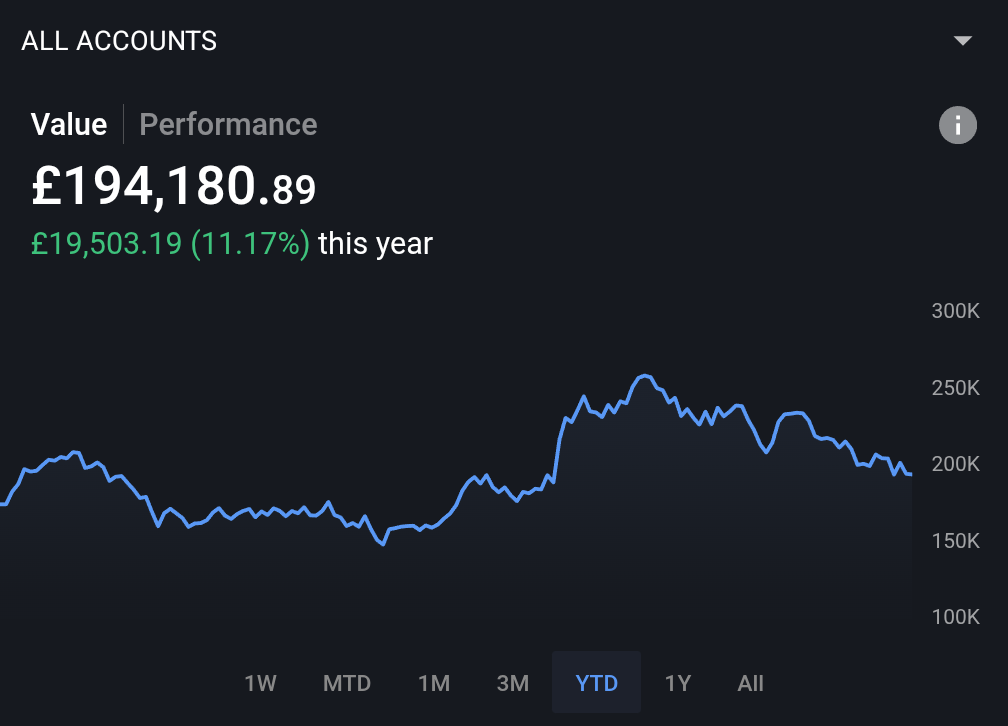
At the 31 July close, the IBKR ISA was worth £194,538.84, including £49.84 of cash. The invested value was £194,489.00.

The separate Trading 212 challenge was worth £12,132.13 at its 31 July snapshot, including £136.74 cash. I am keeping it separate because the two accounts use different reporting timings and serve different purposes.

The main portfolio remains deliberately growth-oriented and concentrated. That is not a claim that concentration is safe. It is an acknowledgement that my returns, good or bad, will be shaped heavily by a relatively small number of positions.

Biggest changes in July

The biggest decision was increasing my Rocket Lab position from 1,000 to 2,000 shares. To fund that change, I sold Apple, Alphabet, NVIDIA and SoFi, and reduced Uber in the IBKR ISA. I wrote separately about why I made Rocket Lab roughly 50% of my portfolio, including the concentration, financing and execution risks I am accepting.

I also increased Micron from eight to 10 shares and Surf Air Mobility from 10,000 to 13,800 shares. These are material changes to a concentrated portfolio, so I want them recorded rather than quietly absorbed into an evergreen holdings page.

No quantity changes were identified in the Trading 212 challenge between its late-July reporting snapshots. Its three holdings at month-end were Uber, Amkor and AST SpaceMobile.

Current main holdings at month-end

At the 31 July IBKR close, the core positions included:

  • Rocket Lab: 2,000 shares at $64.95.
  • Palantir: 250 shares at $123.06.
  • AbCellera: 3,001 shares at $5.71.
  • BETA Technologies: 1,000 shares at $18.93.
  • ServiceNow: 150 shares at $111.23.
  • Surf Air Mobility: 13,800 shares at $0.76.

Those prices are the values in the dated broker snapshot. The live Portfolio page is the better place for the latest IBKR ISA holdings and indicative GBP values.

What I am watching

Rocket Lab remains the central position to watch, partly because of its size and partly because the investment case depends on execution continuing across several moving parts. The opportunity is why I own it. The concentration is why I need to keep looking for evidence that could challenge my view.

I am also watching whether the smaller positions continue to earn their place. Owning a company is not a permanent vote of confidence. I need to be able to explain what I am underwriting, what has changed and what would cause me to reassess.

For AbCellera in particular, the clinical proof points remain important. My latest AbCellera investment update sets out why the next programme milestones matter to the thesis.

Where I could be wrong

The obvious risk is concentration. A few disappointing outcomes at the same time would hurt this portfolio materially. That is especially true when growth companies can be volatile, funding needs can change and expectations move faster than the underlying businesses.

Another risk is confusing familiarity with understanding. Spending time researching a company can improve a thesis, but it can also make a view feel more comfortable than it deserves. The job is to keep testing the assumptions, not just to keep repeating them.

Finally, a positive month-end snapshot does not settle anything. I want the monthly record to show the decisions, the uncertainty and the areas where I could be wrong, rather than turn every portfolio move into a victory lap.

Final thoughts

July made the main portfolio simpler in one sense and riskier in another. I have fewer positions that matter, and more exposure to the ideas I believe in most. The trade-off is that I need to be more disciplined about reassessment when the screen is red as well as when it is green.

This is a personal portfolio record, not financial advice. The positions, prices and weights can change after the reporting date.

Why I Made Rocket Lab 50% of My Portfolio

This is a portfolio-decision update, not a recommendation to copy my allocation. I have previously written about why I find Rocket Lab interesting as an investment. This post explains why I have now made it my largest position.

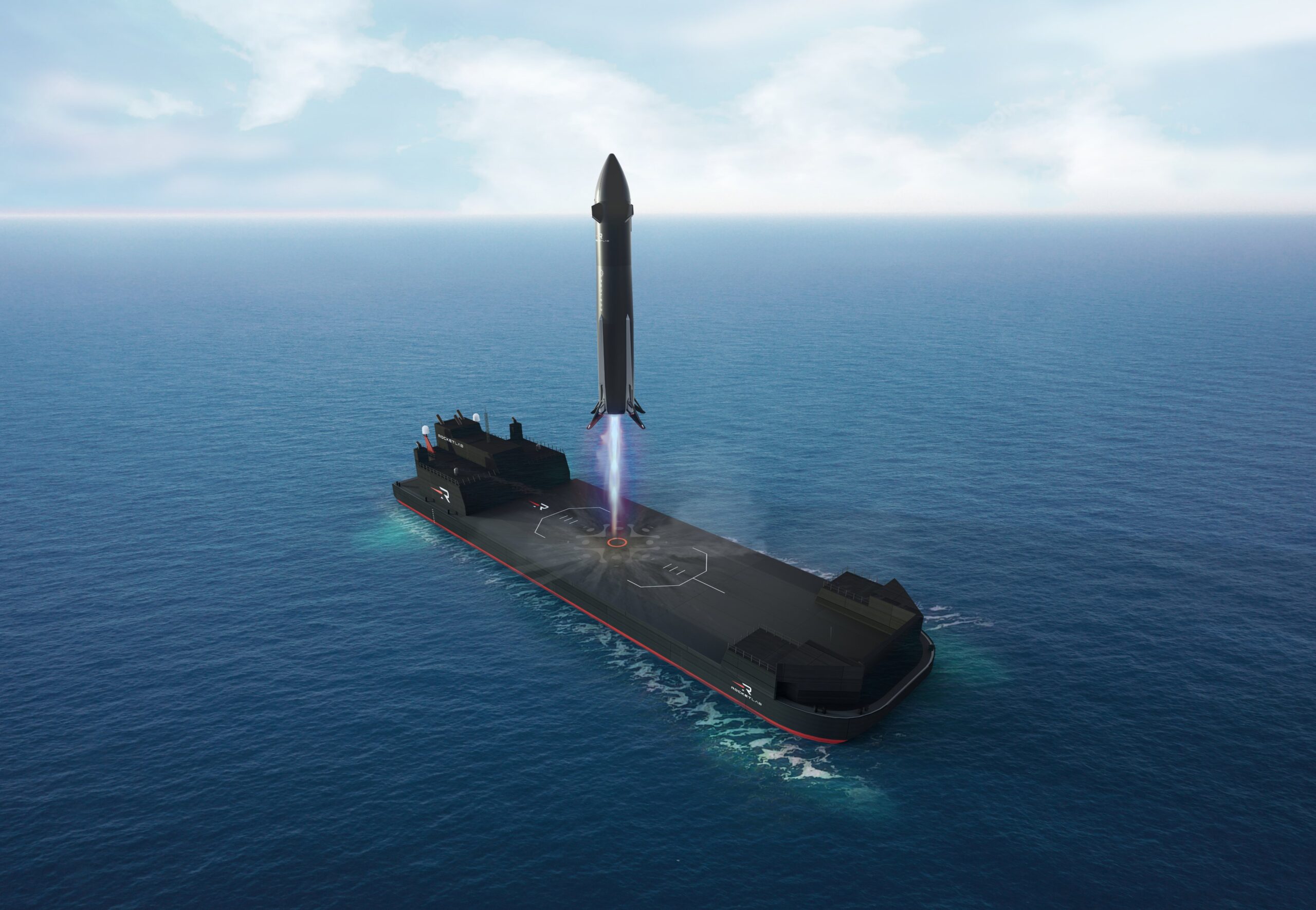
I have sold a number of smaller positions and bought another 1,000 Rocket Lab shares. That takes my holding to 2,000 shares, worth roughly £100,000 at the time of writing and representing about 50% of my portfolio.

This is not a routine rebalance. It is the clearest expression of my current conviction, and it comes with a level of concentration risk that I need to acknowledge plainly.

Why I acted during the sell-off

Rocket Lab shares have fallen sharply. I cannot know precisely what is driving any individual day’s move. One material issue investors are assessing is the proposed Iridium transaction, the financing required to complete it and the potential dilution for existing Rocket Lab shareholders. Those are legitimate concerns, not noise to dismiss because I like the company.

The June 2026 merger agreement gives Iridium shareholders $27.00 in cash plus Rocket Lab stock. It also contemplates a 364-day senior secured bridge facility of up to $3.6 billion. A transaction of that size changes the financial conversation around Rocket Lab, and the market is right to scrutinise it.

My decision was not based on the view that these concerns do not matter. It was based on the view that the sell-off gave me a better entry point into a business whose long-term operating opportunity still looks unusually strong.

What I am underwriting

I see Rocket Lab as more than a launch company. Electron launch, spacecraft systems, components, national-security work and the development of Neutron create several ways for the company to compound if execution remains strong.

The Space Systems business is a major part of the thesis

The part of the business I think can be underestimated is Space Systems. Rocket Lab does not only build hardware for its own missions. Its filings describe a business that designs and manufactures many of the components and subsystems used in its launch vehicles and spacecraft, while also selling spacecraft components into the wider merchant market.

That matters because it creates revenue opportunities beyond Rocket Lab’s own launch cadence. Solar cells, composite structures, separation systems, flight software, reaction wheels, spacecraft buses and other mission-critical components can be supplied to other satellite and space manufacturers. The long-term opportunity is not simply to launch more rockets. It is to participate in more of the value chain when other companies build spacecraft too.

I also like the acquisition strategy behind that ambition. Rocket Lab has been buying capabilities that can deepen vertical integration and solve difficult supply constraints. The completed Mynaric acquisition added laser optical communications technology and strengthened the company’s position in launch services, spacecraft manufacturing and satellite components. The proposed Motiv acquisition would bring solar-array drive assemblies, precision mechanisms and robotics in house, which the company describes as addressing a critical gap in its vertical-integration strategy.

That does not mean every acquisition will work. Integration, capital allocation and execution risk are real, particularly while Rocket Lab is also developing Neutron. But I see a deliberate pattern: buy strategic products and capabilities, reduce dependence on constrained suppliers, use them inside Rocket Lab’s own missions and retain the ability to sell into the broader space market.

The proposed Iridium transaction takes that strategy another step. It would combine Rocket Lab’s launch and spacecraft manufacturing capability with a global satellite communications network and spectrum assets. The financing and dilution questions are therefore not a side issue. They are the price and risk of trying to build a more fully integrated space company.

The most important point is that execution continues to produce evidence. In July, Rocket Lab announced full mission success for VICTUS HAZE, an end-to-end responsive-space mission for the U.S. Space Force. It also announced a full-duration hot-fire test of the Archimedes Vacuum engine, a meaningful development on the path toward Neutron.

Neither milestone removes the risk around Neutron, future funding or the Iridium deal. They do reinforce why I remain interested. The company is trying to become an integrated space business with launch, spacecraft and services capability, rather than a one-dimensional bet on a single rocket.

Why I sold smaller positions

I did not make this change because diversification is bad. Diversification is often sensible, especially when conviction is low or an investor cannot follow every holding closely enough.

For me, the question became whether several smaller positions offered a better prospective return than putting that capital into the company I understand best and feel most committed to following. My answer, at this point in time, was no.

That is a personal judgement, not a universal rule. A concentrated portfolio can be emotionally difficult and financially punishing when the thesis is wrong. I am not presenting this as a safe allocation. I am presenting it as my most honest expression of conviction.

The uncomfortable part of a 50% position

A 50% position changes the emotional reality of investing. A difficult week in Rocket Lab will have a meaningful effect on my portfolio. I will not be able to pretend that volatility is irrelevant, and I should not allow price movement alone to dictate the next decision.

The responsibility is to follow the facts, not defend the purchase. If operational execution weakens, Neutron slips materially, the economics or financing of the Iridium transaction deteriorate, or the overall investment case changes, I need to reassess without anchoring to the size of the position.

What would strengthen or weaken my conviction

  • Strengthen: continued Electron reliability, further national-security execution, tangible Neutron progress and disciplined financing of the Iridium transaction.
  • Weaken: material Neutron delays, operating setbacks, a financing outcome that damages the long-term economics for existing shareholders, or evidence that the acquired assets cannot be integrated as expected.

My view now

I have chosen to be concentrated because I believe Rocket Lab has one of the strongest long-term opportunities in the public space market. That does not make it a certainty. It makes it the position I am most willing to study, hold accountable and accept real volatility in.

The next job is not to celebrate the size of the position. It is to keep testing the reasons I bought it.

Sources: Rocket Lab 2025 Form 10-K; Rocket Lab Q1 2026 Form 10-Q; Rocket Lab’s 29 June 2026 Form 8-K on the proposed Iridium transaction; Rocket Lab’s VICTUS HAZE mission update; Rocket Lab’s Archimedes Vacuum engine test update.

This is personal investing commentary, not financial advice. I own Rocket Lab shares and may buy or sell without updating this post immediately.

View my Portfolio · Read my original Rocket Lab thesis · Browse all RKLB writing

The Background to My £1M Journey

I recently recorded a short YouTube video explaining the background to my journey so far, why I share what I share, and how investing became tied up with a bigger question about freedom.

If you want to watch the original video first, you can do that here: The background to my £1M journey.

It did not start with a master plan

From the outside, a strong portfolio can look clean and deliberate. The truth is usually messier than that.

I had a decent job, a decent life, and the kind of setup that should have felt reassuring. But there was a gap between being comfortable on paper and feeling fulfilled in reality. That gap ended up mattering more than I expected.

Before I became serious about building wealth through stocks, I had already had two experiences that stayed with me. I made some money in Bitcoin early, but not enough to change my life. I also bought Tesla years ago, watched it fall, got nervous, and sold far too early.

Neither decision was a disaster. Both still taught me the same thing: being early is not enough if you cannot hold your nerve.

The emotional cost of selling too soon

One of the hardest parts of investing is not finding interesting ideas. It is living with the emotional discomfort that comes after you buy them.

In the video I talk about putting around £5,000 into Tesla, seeing it drop, then eventually selling around £6,000. At the time that felt sensible. Looking back, it was a classic case of protecting myself from short-term pain at the cost of long-term upside.

That experience, combined with an earlier brush with crypto, left me with a feeling that I had seen opportunities without really backing myself. The money mattered, but the bigger issue was what those decisions said about conviction.

That is part of why themes like what financial independence actually feels like and defining what enough means have become so central to how I think now.

Rocket Lab changed the scale of the journey

The real turning point came later when I started doing deeper research and came across the Rocket Lab story. It was not just a case of hearing a tip and buying a ticker. It was the combination of hearing a compelling thesis, doing my own work, and feeling that I understood enough to take the risk seriously.

I come from an engineering background, so some parts of the company and its culture made intuitive sense to me. That did not make the investment risk-free. It did mean I felt able to judge it with more confidence than I had in the past.

In the video I explain that I built a large position in Rocket Lab and that decision ended up changing my financial trajectory in a very real way. It is still one of the clearest examples in my own life of what can happen when research, timing, conviction, and luck line up together.

If you want the fuller stock case rather than the personal background, I have a separate post on my Rocket Lab investment thesis.

This is bigger than stock picks

The video is not really about trying to prove I was right on one company. It is more about why I started documenting all of this in public.

For me, the portfolio is tied to a broader question: what does freedom actually look like when work no longer has to dominate your life?

That is why a lot of my content sits at the overlap between money, investing, work, identity, and fulfillment. I am interested in the numbers, but I am just as interested in what the numbers are for.

That is also why I increasingly prefer to talk openly about the emotional side of the process. Missing opportunities, selling too soon, feeling isolated, wondering whether you have enough, and trying to work out what you actually want your life to look like all matter just as much as the ticker symbols do.

Why I am sharing this publicly

I want to be very clear about what this is and what it is not.

I am not trying to present myself as a guru. I am not selling a dream. I am not pretending there is a formula that, if copied closely enough, guarantees the same outcome.

I am documenting a real process in real time. That includes the parts that went well, the parts I got wrong, and the parts I am still trying to understand.

That is also why transparency matters to me. Over time I think my website will work best if the evergreen stock theses stay in place while the changing reality of what I own, how I think, and what has shifted gets documented through dated portfolio reviews and more personal reflections.

The real point of the journey

Reaching a number is not the whole story. The harder question is what you do with the freedom that number might create.

I am still figuring that out. That is probably the most honest way to put it.

If this topic resonates, the video is worth watching because it shows the thinking behind the account in a more direct and personal way than a written post can. You can watch it here: The background to my £1M journey.

You can also follow more of the day-to-day thinking on X, where I share portfolio thoughts, reflections, and updates as the journey continues.

Rocket Lab: Powering the Future of Space Innovation and Growth

Rocket Lab has rapidly emerged as a leading player in the evolving commercial aerospace industry, with a clear mission to make access to space more affordable, frequent, and versatile. Specializing in launching small satellites and spacecraft platforms, the company’s innovative technology and growth strategy have captured investor attention in 2025 as they prepare for a major leap forward with the development of their new Neutron rocket.

Expanding Market Presence and Product Portfolio

Rocket Lab’s flagship Electron rocket is already one of the most frequently launched commercial rockets in the U.S., serving customers across commercial, scientific, and defense sectors. This proven system has helped the company build a strong reputation for reliability and flexibility. Now, Rocket Lab is advancing its capabilities with the upcoming Neutron rocket, a medium-lift launch vehicle designed for heavier payloads and deep-space missions, targeting initial flights in 2025–2026.

Alongside launch services, Rocket Lab designs and manufactures the Photon spacecraft, which delivers satellites ready for orbit, providing end-to-end mission solutions. Its operations span launch facilities in both New Zealand and the U.S., positioning the company well to capitalize on growing demand from national security, government, and commercial clients.

Financial Momentum and Growth Outlook

In the past year, Rocket Lab has demonstrated robust revenue growth, with a reported increase of approximately 65% over the last four quarters. The company has secured a healthy backlog near $1 billion, including a balanced mix of government contracts and commercial agreements. Though still operating at a loss due to ongoing investments in technology development and expansion, Rocket Lab’s path toward profitability looks promising with expansions in launch cadence and the Neutron project moving into production stages.

Analysts forecast annual revenue growth continuing at a strong clip, potentially more than doubling within the next few years. Their long-term vision suggests that Rocket Lab could reach annual revenues in the billions within this decade, driven largely by increased launches, spacecraft sales, and mission support services.

Innovation and Strategic Partnerships

Rocket Lab’s acquisition of Geost—specializing in electro-optical and infrared sensors—strengthens its foothold in the national security space domain, enabling new high-value contracts related to missile warning and tracking. The company’s strategy to be a one-stop-shop for satellite deployment and space mission execution differentiates it in an increasingly competitive market.

The Neutron rocket symbolizes Rocket Lab’s ambition to access larger payload markets and more complex mission profiles, which, combined with expanding commercial and government partnerships, forms the backbone of their robust growth thesis.

Navigating Risks and Volatility

As with any high-growth aerospace company, Rocket Lab faces challenges, including technical risks around new rocket development, cash burn during expansion, and the uncertainty of contract wins. Market sentiment can fluctuate, reflecting the balance between optimism for the space economy’s potential and the realities of a capital-intensive sector.

However, the company’s demonstrated progress, strong backlog, and diversified revenue streams provide a solid foundation for investors willing to accept some volatility in pursuit of outsized long-term gains.

Conclusion: A Rocket Ready to Launch Into the Future

Rocket Lab is not just participating in the new space race; it is positioning itself to lead with innovative technology, expanding launch capabilities, and strategic diversification. For investors seeking exposure to the rapidly growing space economy, Rocket Lab offers an attractive blend of proven operational success and ambitious future potential. With the Neutron rocket’s debut on the horizon and an increasing number of contracts fueling growth, Rocket Lab stands as a compelling growth story to watch closely in 2025 and beyond.